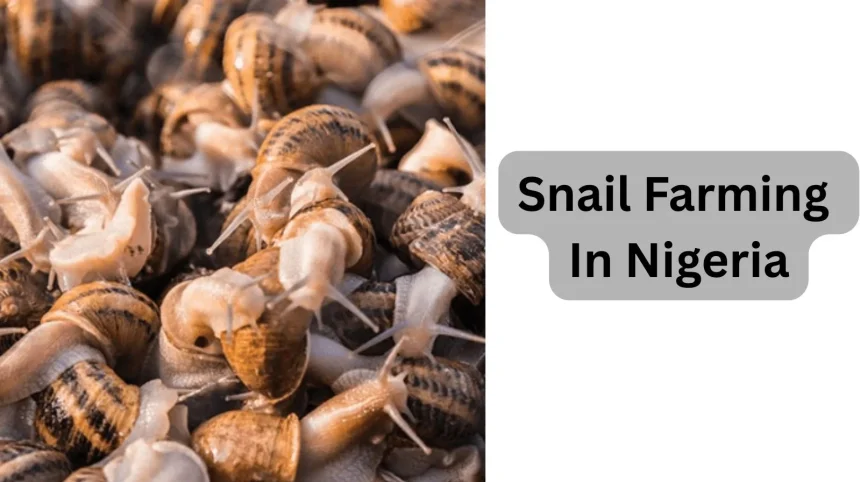
Snail farming in Nigeria also known as heliculture or snail culture is one of the most profitable and low-risk agricultural businesses available to Nigerian entrepreneurs today. Whether you have a large plot of land or just a backyard, raising snails offers a steady income with minimal startup capital.
- What Is Snail Farming?
- Why Snail Farming in Nigeria Is a Profitable Business
- Choosing the Right Snail Species for Your Farm
- Archachatina marginata (Giant West African Snail)
- Achatina achatina (Giant Ghana Snail)
- Achatina fulica (Giant African Land Snail)
- Types of Snail Farming Systems in Nigeria
- Free-Range System
- Intensive Pen System
- Indoor / Controlled Environment System
- Vertical Stacking System
- Greenhouse System
- Tyre System
- Soilless System
- Snail Farming Requirements: What You Need Before You Start
- Where to Buy Snails (Brood Stock) in Nigeria
- Snail Farming Equipment and Tools
- How to Build Your Snail Pen: All Methods Explained
- Wooden Hutch Pen (Most Recommended for Beginners)
- Concrete Block Pen
- Snail Farming with Tyres
- Plastic/Drum Container Pen
- Snail Farming with Tyres
- Indoor Snail Farming
- Greenhouse for Snail Farming
- Benefits of a Snail Greenhouse
- Types of Greenhouses for Snail Farming in Nigeria
- Managing Humidity in a Greenhouse
- Vertical Snail Farming
- Soilless Snail Farming
- Water Snail Farming
- Feeding Your Snails: Complete Diet and Schedule
- Breeding and Egg Management
- Caring for Hatchlings: The First 8 Weeks
- Snail Diseases, Pests, and How to Treat Them
- Seasonal Management: Wet Season vs. Harmattan
- Wet Season (April – October): Prime Growing Season
- Harmattan Season (November – March): High-Risk Period
- Monthly Farm Management Calendar
- Harvesting Your Snails: When and How
- How to Tell When a Snail Is Ready to Harvest
- Harvesting Method
- Keeping Harvested Snails Alive Before Sale
- Processing Snail Meat for Sale
- Step 1: Purging
- Step 2: Killing and Removing Meat from Shell
- Step 3: Cleaning
- Step 4: Parboiling
- Step 5: Packaging and Storage
- How to Sell Your Snails in Nigeria
- Channel 1: Local Markets
- Channel 2: Restaurants and Hotels
- Channel 3: Supermarkets and Food Shops
- Channel 4: Online Sales
- Channel 5: Sell Breeding Stock to Other Farmers
- Channel 6: Export
- Pricing Your Snails
- Record Keeping and Farm Management
- Cost of Setting Up a Snail Farm in Nigeria (Full Breakdown)
- Micro Farm — Starter (100–300 snails) — For Absolute Beginners
- Small Commercial Farm (500–1,000 snails)
- Medium Commercial Farm (3,000–5,000 snails)
- Large Commercial Farm (10,000+ snails)
- How to Start Snail Farming with ₦1,000
- Snail Farm Profit in Nigeria: Realistic Earnings Projections
- Year 1 Projections (Starting with 500 snails — Small Commercial Farm)
- Year 2 Projections (Stock multiplied from breeding)
- Additional Revenue Streams to Maximise Profit
- Common Mistakes to Avoid
- Frequently Asked Questions About Snail Farming in Nigeria
- Conclusion
This guide is written to be the only resource you need. By the time you finish reading, you will know exactly where to buy your first snails, how to house and feed them, how to handle disease outbreaks, how to manage breeding, how to harvest and process your snails, and how to find buyers and make consistent profit, all without needing to look anywhere else.
What Is Snail Farming?
Snail farming, scientifically referred to as heliculture, is the practice of raising land snails under controlled conditions for commercial purposes. Snails are cultivated for their meat — a rich, low-fat source of protein — as well as their shells and mucus, which is increasingly used in cosmetics and pharmaceuticals.
Snail cultivation has been practiced for centuries in France and other parts of Europe, and it is now one of the fastest-growing agricultural sectors across West Africa, particularly in Nigeria where snail meat (called eju in Igbo, igbin in Yoruba, and katantanwa in Hausa) is a deeply loved delicacy consumed across all ethnic groups.
Why Snail Farming in Nigeria Is a Profitable Business
Nigeria is the largest consumer of snails in Africa, yet local production consistently falls far short of demand. The country imports significant quantities of snails every year. Here is why starting a snail farm in Nigeria is one of the smartest agricultural investments you can make today:
High demand, low supply. Every market in Nigeria sells snails. Demand peaks during festive seasons (Christmas, Easter, Eid) and during the rainy season when wild snail populations naturally emerge. Yet supply is never enough.
Low startup cost. You can begin with as little as ₦10,000–₦50,000 for a small farm. Even a commercial operation starts at a fraction of what poultry or fishery farming requires.
Low mortality rate. Snails are hardy animals that rarely fall sick when properly managed. A well-run snail farm loses fewer than 5% of stock per year.
No noise, no offensive smell. Unlike poultry or piggery, snail farming is neighbour-friendly and can be done discreetly in residential areas.
High profit margins. Snails sell for ₦800–₦3,500 per kilogram depending on size, species, and season. Profit margins of 200–400% are achievable within 18–24 months.
Multiple income streams. You earn from selling live snails, processed snail meat, snail eggs, shells (used by artists and craftsmen), breeding stock, and snail slime (cosmetic industry).
Eco-friendly. Snails require very little water compared to livestock, produce no harmful gases, and their waste enriches soil.
Choosing the Right Snail Species for Your Farm
This is one of the most important decisions you will make. There are three main species farmed in Nigeria:
Archachatina marginata (Giant West African Snail)
This is the most recommended species for Nigerian farmers, especially beginners. It is indigenous to West Africa, meaning it is naturally adapted to Nigerian climate and soil conditions. Key facts:
- Shell length: 12–20 cm
- Weight at maturity: 200–500g
- Growth period to market size: 12–18 months
- Egg clutch size: 4–18 eggs per clutch (fewer but larger eggs)
- Market price: Highest of all three species — buyers pay a premium for its large size
- Hardiness: Very robust; tolerates handling well
- Best for: All regions of Nigeria, especially south-south and south-west
Achatina achatina (Giant Ghana Snail)
The largest land snail in the world, native to West Africa. Also very popular in Nigerian markets.
- Shell length: 18–30 cm
- Weight at maturity: 300–600g
- Growth period: 10–14 months
- Egg clutch size: 100–400 eggs per clutch
- Market price: High — its enormous size commands attention
- Hardiness: Slightly more sensitive to temperature extremes than A. marginata
- Best for: High-humidity areas (Edo, Delta, Cross River, Akwa Ibom)
Achatina fulica (Giant African Land Snail)
The fastest-growing and most prolific breeder of the three. Popular with farmers who want rapid stock multiplication.
- Shell length: 10–20 cm
- Weight at maturity: 150–300g
- Growth period: 6–10 months
- Egg clutch size: 100–500 eggs per clutch, multiple times per year
- Market price: Lower than the other two — smaller body size
- Hardiness: Very hardy; adapts to a wide range of environments
- Best for: Farmers focused on volume production and rapid stock building
Recommendation for beginners: Start with Archachatina marginata. It commands the best price, is the most forgiving, and is the species most buyers in Nigeria specifically seek out.
Types of Snail Farming Systems in Nigeria
Before you spend a single naira, decide which farming system suits your space, climate, and budget.
Free-Range System
Snails are enclosed in a large, fenced outdoor area and left to forage naturally. Low management input but difficult to monitor individual snails, control breeding, or prevent predation. Best for: Large land areas in forested, humid southern Nigeria.
Intensive Pen System
Snails are housed in constructed wooden or concrete pens with controlled feeding, watering, and breeding. This is the most popular commercial method in Nigeria and gives you the best control over production outcomes.
Indoor / Controlled Environment System
Snails are raised entirely inside a building — a room, shed, or purpose-built structure. Ideal for urban farmers. Requires more management of temperature and humidity but offers year-round production regardless of season.
Vertical Stacking System
Pens or trays are stacked in tiers to multiply production per square metre. Works best combined with indoor or greenhouse setups.
Greenhouse System
A polythene or shade-net structure that maintains optimal temperature (24–30°C) and humidity (75–90%) year-round. Best for northern Nigeria and farmers in drier climates.
Tyre System
Old vehicle tyres stacked and filled with soil. The cheapest possible housing method. Ideal for beginners and small-scale farmers.
Soilless System
Substrate (coconut coir, wood shavings) replaces soil. Cleaner, easier to manage, and eliminates soil-borne disease risks. Best for indoor and vertical setups.
Snail Farming Requirements: What You Need Before You Start
Space
You do not need a large area to begin. A 5m × 5m backyard can support 200–500 snails in a tyre or pen system. Scale up as your confidence and capital grow.
Climate
Snails thrive in temperatures of 24–30°C and relative humidity of 75–95%. Southern Nigeria (Lagos, Ogun, Oyo, Edo, Delta, Anambra, Enugu, Imo, Rivers, Cross River, Akwa Ibom) offers near-perfect natural conditions. Farmers in Abuja, Kaduna, Kano, and other drier northern states must invest in humidity management — either a greenhouse or daily misting routines.
Soil
For any system that uses soil, you need loamy soil — not sandy, not clay-heavy, and definitely not waterlogged. The ideal soil has a pH of 6.5–7.5 and must be at least 25 cm deep in the pen so snails can burrow and lay eggs. Avoid soil treated with chemical fertilisers or pesticides.
Water
Snails do not drink water the way mammals do — they absorb moisture through their skin and from their food. You will mist the pen twice daily with clean water. Do not use salt water or heavily chlorinated tap water directly — allow tap water to stand for 30 minutes before use to let chlorine dissipate.
Shade
Snails cannot tolerate direct sunlight. All outdoor pens must be placed under a tree, shade netting, or a roof structure. Direct sun for even a few hours can kill snails through dehydration.
Security
Your pen must be escape-proof (snails are surprisingly good climbers) and predator-proof. The main threats are soldier ants, frogs, snakes, lizards, and rats.
Where to Buy Snails (Brood Stock) in Nigeria
This is the section most articles skip — and it leaves beginners stranded. Here is exactly where and how to source healthy brood stock in Nigeria.
Option 1: Local Markets
Every major market in Nigeria sells snails. Visit the following types of markets and look for the largest, most active snails with intact shells:
- Lagos: Mile 12 Market, Oyingbo Market, Mushin Market
- Ogun: Kuto Market (Abeokuta), Sagamu Market
- Oyo: Bodija Market (Ibadan), Ojoo Market
- Anambra/Enugu: Onitsha Main Market, Ogbete Market (Enugu)
- Rivers: Mile 1 Market, Mile 3 Market (Port Harcourt)
- Cross River: Marian Market (Calabar)
- Edo: Oba Market (Benin City)
Market snail prices: ₦100–₦500 per snail depending on size and species.
Caution with market snails: Some market snails have been stored for days without food or water and may be stressed. Buy from fresh deliveries (early morning is best), choose the most active snails, and give them a recovery period of one week in your pen with food and water before treating them as permanent breeding stock.
Option 2: Established Snail Farms
Buying from an existing snail farm guarantees you get the right species, healthy stock, and often some basic training from the seller. Look for farms in your state through:
- Agricultural extension offices (ADP — Agricultural Development Programmes exist in every state)
- State Ministry of Agriculture
- Nigerian Agricultural Association networks
- Facebook groups: Search “snail farming Nigeria” — several active communities sell breeding stock
Farm stock prices: ₦300–₦1,500 per snail for verified breeding adults. More expensive than market snails but worth it for guaranteed species purity and health.
Option 3: Forest/Wild Collection
In forested parts of southern Nigeria, you can collect wild Archachatina marginata or Achatina achatina from the forest during the rainy season (April–October). This is free but requires knowing how to identify the right species. Collect from clean forest areas away from farms that use chemicals.
How to select healthy brood stock regardless of source:
- Shell must be intact — no cracks, chips, or holes
- The snail must retract fully into its shell when touched, then re-emerge
- No discharge from the shell opening
- Active and moist (not dry or shrivelled)
- Choose the largest individuals available — size is hereditary
Snail Farming Equipment and Tools
| Equipment | Purpose | Estimated Cost (₦) |
|---|---|---|
| Snail pens/hutches | Main housing | 10,000 – 80,000 |
| Wire mesh (gauge 1cm) | Pen covers to prevent escape | 3,000 – 15,000 |
| Hand pump sprayer / mister | Moistening pen environment | 3,000 – 8,000 |
| Feeding troughs (plastic or clay) | Holding feed inside pen | 500 – 3,000 |
| Calcium supplement trough | Dedicated calcium feeding station | 500 – 2,000 |
| Soil thermometer | Monitoring soil temperature | 3,000 – 8,000 |
| Hygrometer | Monitoring air humidity | 3,000 – 12,000 |
| Digital weighing scale | Weighing harvested snails | 8,000 – 20,000 |
| Plastic storage crates | Holding harvested snails | 3,000 – 8,000 |
| Latex hand gloves | Handling snails safely | 500 – 2,000 |
| Notebook / farm register | Record keeping | 500 – 1,000 |
| Ash or petroleum jelly | Predator barriers around pens | 500 – 2,000 |
Total starter equipment budget: ₦15,000–₦50,000 depending on scale.
How to Build Your Snail Pen: All Methods Explained
Wooden Hutch Pen (Most Recommended for Beginners)
A simple wooden frame pen is affordable, easy to build, and effective. Here is how to construct one:
Materials needed:
- Planks of wood (2 inches thick)
- Wire mesh (1cm gauge — small enough to prevent escape)
- Nails and hinges
- Roofing material (zinc or plywood for the lid)
Dimensions for a starter pen: 2m long × 1m wide × 0.5m deep. This accommodates 50–100 snails comfortably.
Construction steps:
- Build a rectangular wooden frame with the dimensions above.
- Line the bottom and sides with wire mesh.
- Fill with 25–30 cm of loamy soil mixed with compost (ratio 3:1).
- Build a hinged lid from wood and wire mesh for easy access.
- Place the pen on a raised platform (30 cm off the ground) to prevent flooding and deter crawling predators.
- Apply petroleum jelly or wood ash around the base legs to deter ants.
Cost to build: ₦8,000–₦25,000 per pen depending on size and materials.
Concrete Block Pen
More permanent and durable. Built like a raised flower bed using cement blocks. Line the interior with smooth plaster so snails cannot escape up the walls. Cover with wire mesh and a wooden or zinc lid.
Cost: ₦30,000–₦80,000 per pen. Best for: Medium to large commercial operations.
Snail Farming with Tyres
See dedicated section below.
Plastic/Drum Container Pen
Large plastic drums, buckets, or containers with ventilation holes drilled in the sides and lid. Ideal for beginners with zero budget for construction.
Cost: ₦2,000–₦8,000 per container.
Snail Farming with Tyres
Snail farming with tyres is the most popular beginner method in Nigeria for good reason — it is virtually free, effective, and scalable.
How to set it up:
- Visit any auto repair shop (mechanic) and ask for condemned (worn-out) tyres. Most will give them to you free or for ₦100–₦200 each.
- Stack 3–4 tyres vertically on level ground in a shaded location.
- Seal the bottom of the lowest tyre with wire mesh or a wooden board to prevent soil from falling out and to keep predators from entering below.
- Fill each tyre stack with loamy soil mixed with compost to a depth of about 25 cm.
- Cover the top tyre with wire mesh cut to size and held in place with a rubber strap or cord.
- Introduce 10–20 snails per tyre stack depending on tyre diameter (car tyres vs. truck tyres).
- Place a small feeding tray and a calcium supplement tray inside.
- Mist lightly morning and evening.
Advantages: Almost zero cost, easy to add more tyres as stock grows, portable, and excellent for learning snail behaviour before investing in a larger system.
Tip: Paint the outside of the tyres black to absorb heat in cool weather, or white to reflect heat in very hot weather.
Indoor Snail Farming
Indoor snail farming is rapidly gaining popularity in Nigerian cities where outdoor space is scarce or expensive. It is entirely feasible in a spare room, a shed, or even a large covered balcony.
Setting up an indoor snail farm:
Ventilation: This is the single most important factor. Install louvre windows, ventilation bricks, or a small electric fan. Stale, humid air with no circulation encourages respiratory problems and mould. Aim for fresh air circulation without direct draughts on the snails.
Lighting: Snails are nocturnal — they are most active at night. Inside, keep lighting dim or use a red bulb during observation. Avoid exposing snails to bright white light for prolonged periods.
Temperature: Keep the room between 24°C and 30°C. During hot Lagos afternoons, a small fan circulating air is sufficient. During Harmattan, a bowl of water placed near the pens helps maintain ambient humidity.
Humidity: Target 75–90% relative humidity. Check with a hygrometer daily. Mist pens twice daily — morning and evening.
Hygiene: Clean pens every 2–3 days. Remove uneaten food, dead snails, and excess waste. This is more important indoors than outdoors because odours concentrate in enclosed spaces.
Stocking density for indoor pens: Do not exceed 1 snail per 100 square centimetres of floor space. Overcrowding indoors leads to stress, fighting, and disease spread.
Greenhouse for Snail Farming
A greenhouse is the gold standard for snail production in Nigeria, particularly for farmers in Abuja, Kaduna, Kano, Jos, and other areas where Harmattan creates long dry spells that are lethal to unprotected snail farms.
Benefits of a Snail Greenhouse
- Year-round production regardless of season
- Mortality rate reduced to below 3% when managed properly
- Full control over temperature and humidity
- Protection from all predators and thieves
- Can be combined with vertical farming to multiply yield per square metre
Types of Greenhouses for Snail Farming in Nigeria
Polythene greenhouse: The most affordable option. A simple wooden or metal frame covered with UV-stabilised polythene sheeting. A 6m × 12m polythene greenhouse costs ₦150,000–₦400,000 to construct.
Shade-net greenhouse: Uses green shade netting (50–70% shade) instead of polythene. Better ventilation — ideal for southern Nigeria where humidity is already high. Cost: ₦100,000–₦300,000.
Permanent brick greenhouse: The most durable option with concrete walls, a wire mesh roof, and plaster interior. Cost: ₦500,000–₦2,000,000 depending on size.
Managing Humidity in a Greenhouse
Install a simple drip irrigation system or an automated misting timer to maintain consistent humidity without daily manual labour. This investment of ₦30,000–₦80,000 saves enormous time on large farms.
Vertical Snail Farming
Vertical snail farming stacks enclosures upward to multiply production capacity without expanding your land footprint. One square metre of floor space can house 500–1,500 snails using a 5-tier vertical system, compared to just 100–200 snails in a flat pen.
Building a Vertical Snail Farm
- Construct or purchase metal or wooden shelving units (2m tall × 1m wide × 0.5m deep per shelf).
- Line each shelf with a plastic tray or wooden panel as the floor.
- Install wire mesh sides and a hinged mesh lid on each tier.
- Fill each tier with 15–20 cm of substrate (loamy soil or coconut coir for soilless systems).
- Stack 5 tiers per unit, spacing tiers at least 35 cm apart for proper airflow and ease of management.
- Install a drip misting line running along the back of each tier, connected to a timer.
Managing a Vertical System
- Feed from top to bottom in rotation so no tier is missed.
- Check each tier for escapes, deaths, and egg clutches daily.
- Clean bottom trays more frequently as they collect moisture dripping from upper tiers.
- Label each tier with the introduction date of that batch so you can track growth and harvest by age.
Soilless Snail Farming
Soilless snail farming replaces traditional soil with alternative substrates. It is cleaner, eliminates many soil-borne diseases, and is much easier to manage in indoor and vertical systems.
Best substrates for soilless snail farming in Nigeria:
Coconut coir (coco peat): The best option. Lightweight, holds moisture well, pH-neutral, and widely available at agricultural supply stores in Lagos, Ibadan, and Port Harcourt. Cost: ₦1,500–₦4,000 per 5kg block.
Wood shavings: Cheap and readily available from sawmills. Must be untreated — never use shavings from chemically treated wood. Mix with compost at a 2:1 ratio.
Peat moss: Excellent moisture retention but more expensive and less available in Nigeria.
Important: Providing an egg-laying zone in soilless systems Snails must lay their eggs in moist soil or a soil-like substrate. Even in a fully soilless system, place a small tray (30 cm × 20 cm) filled with moist, fine sand or calcium-enriched coir inside each pen as the dedicated egg-laying area. Check this tray daily during breeding season and remove egg clutches for controlled incubation.
Water Snail Farming
Water snail farming is a niche but growing opportunity, particularly in Nigeria’s riverine communities in Rivers, Delta, Bayelsa, and Akwa Ibom states. The most farmed freshwater species are Pila ovata and Lanistes libycus.
Setting Up a Water Snail Farm
- Construct a small pond (2m × 3m × 0.5m depth minimum) using concrete, tarpaulin pond liner, or a repurposed large tank.
- Fill with clean, de-chlorinated water.
- Introduce aquatic plants — water hyacinth, duckweed, water lettuce — as both food and shelter.
- Stock at a density of 100–300 snails per square metre.
- Feed with supplementary leafy greens and calcium additives.
- Change 30% of the water weekly to maintain water quality.
- Harvest every 6–10 months.
Integration tip: Water snails can be raised alongside tilapia or catfish in the same pond, creating an integrated aquaculture system. The snails feed on algae and plant debris while the fish benefit from the same food inputs. This doubles income from the same water body and space.
Feeding Your Snails: Complete Diet and Schedule
Getting the diet right is what separates thriving snail farms from struggling ones. Snails need two things from their food: energy (from plant matter) and calcium (for shell development).
What to Feed Your Snails
Leafy Vegetables and Fruits (Primary Food):
- Pawpaw (papaya) leaves and fruit — the single best snail food in Nigeria; widely available and loved by all species
- Banana and plantain leaves and peels
- Cassava leaves (fresh, not dried)
- Sweet potato leaves
- Watermelon (fruit and rind)
- Cucumber
- Lettuce and cabbage (in moderation — too much causes loose droppings)
- Pumpkin (ugwu) leaves
- Mango (ripe fruit and leaves)
- Cocoyam leaves
Calcium Sources (Essential for Shell Growth):
- Crushed dry snail shells — the best and cheapest calcium source in Nigeria
- Crushed eggshells (dry and grind them)
- Ground limestone (agricultural lime) — available at agro-chemical stores
- Bone meal
- Oyster shell powder
- Wood ash mixed with water and allowed to dry into a paste
Never feed your snails:
- Salty foods of any kind — salt is lethal to snails
- Onions, garlic, or any allium family plants
- Rotten or mouldy food
- Processed human food (bread, cooked rice, etc.)
- Chemically sprayed vegetables — wash all produce thoroughly before feeding
Feeding Schedule
Snails are nocturnal — they feed most actively between 7 pm and 4 am. Always feed in the evening, not the morning.
Daily routine:
- 6:00 pm: Place fresh food inside the pen. Quantity guideline: approximately 10g of wet food per adult snail per day. For 100 snails, that is about 1 kg of mixed greens.
- 7:00 am (next morning): Remove any uneaten food before it rots. Do not leave food in the pen for more than 12–16 hours.
- 7:30 am: Mist the pen lightly with water.
- 6:30 pm: Mist again before the evening feeding.
Calcium feeding: Place a separate small dish of calcium supplement (crushed eggshells or limestone) in the pen permanently. Snails self-regulate their calcium intake — they eat as much as they need. Refill the calcium dish every 2–3 days.
Feeding Tips
- Vary the diet. Snails grow faster and healthier on a mixed diet than on a single food source.
- Pawpaw leaves should form 40–50% of the diet — they are the most nutritious option available in Nigeria.
- Feed more heavily during breeding season (rainy season) to support egg production.
- Hatchlings and juvenile snails need finely chopped or mashed food — they cannot eat large leaves.
Breeding and Egg Management
Understanding snail reproduction is critical to building a profitable farm. Mismanaged breeding is the most common reason farms fail to grow.
How Snails Reproduce
All Achatina and Archachatina snails are hermaphrodites — each snail has both male and female reproductive organs. However, they still need to mate with another snail. Self-fertilisation is rare and produces fewer viable eggs.
Mating occurs at night. Two snails align themselves and exchange sperm simultaneously. After mating, both snails can store sperm for several months, meaning a single mating event can produce multiple egg clutches over time.
When Do Snails Breed in Nigeria?
In Nigeria, the natural breeding season runs with the rainy season (April–October). This is when humidity is high, food is abundant, and soil conditions are ideal for egg-laying. In greenhouses or controlled indoor environments, you can extend breeding to near year-round by maintaining humidity above 80%.
Egg Laying
After mating, a snail will burrow into the soil to lay its eggs 4–6 weeks later. Signs that a snail is about to lay eggs: it becomes less active, spends more time in the soil, and may refuse food for 1–2 days.
- Achatina achatina / A. fulica: 100–400 eggs per clutch, white and spherical (about 4–5mm diameter), laid 2–4 times per year
- Archachatina marginata: 4–18 eggs per clutch, larger (10–15mm diameter), laid 3–6 times per year
Egg Collection and Incubation
Do not leave eggs in the main pen — adult snails can accidentally crush them, and temperature fluctuations can kill them.
How to collect eggs:
- Check the soil surface and shallow burrowing spots daily during breeding season.
- When you see a clutch of eggs (a small cluster of white/cream balls in the soil), carefully remove them with a small spoon. Do not crack them.
- Transfer the eggs to a separate incubation container.
Setting up an incubation container:
- Use a small plastic container (20cm × 15cm × 10cm) with a lid.
- Fill with 5 cm of slightly moist, fine sand or coconut coir.
- Place the egg clutch gently on the surface or just below the surface (1 cm deep).
- Mist lightly every 2 days — do not soak. The substrate should be barely damp.
- Keep the incubation container in a warm, stable location (26–28°C).
- Do not move the container unnecessarily.
Incubation period: 21–28 days for Achatina species; 28–35 days for Archachatina marginata.
Signs of hatching: You will see tiny (3–5mm) snails emerging from the soil in the incubation box. Do not disturb them for the first 24 hours — they are consuming remaining egg yolk.
Caring for Hatchlings: The First 8 Weeks
The first eight weeks of a hatchling’s life are the most vulnerable. Get this right and your farm multiplies rapidly.
Week 1–2: The Newborn Stage
Transfer hatchlings to a dedicated nursery pen — a small, separate enclosure away from adult snails. Adult snails can accidentally crush or outcompete hatchlings for food.
Nursery pen setup:
- Small container (40cm × 30cm) with moist coconut coir or fine loamy soil (5 cm deep)
- Wire mesh lid with very fine gauge (2–3mm) — standard 1cm mesh allows hatchlings to escape
- Place in a warm, humid, shaded location
- Stock at no more than 50 hatchlings per 40cm × 30cm container
Feeding newborns:
- Mashed ripe pawpaw fruit
- Finely grated watermelon flesh
- Finely crushed eggshell (calcium is critical — shells develop in the first 2 weeks)
- Soft, mashed banana
Feed a very small amount (hatchlings are tiny — a teaspoon per 20 snails is sufficient). Remove uneaten food every 12 hours.
Mist very lightly twice daily. Hatchlings are easily waterlogged — do not over-mist.
Week 3–4: Early Growth
Hatchlings are now 1–2 cm long and more robust. You can introduce slightly larger pieces of food — quarter-inch strips of pawpaw leaf, small cucumber slices.
Continue keeping them in the nursery pen. Begin checking for any that are not growing at the same rate as their siblings — these may be sick or genetically weak. Remove and isolate them.
Week 5–8: Juvenile Stage
By week 5, juveniles are 2–4 cm long and can be transferred to a larger grow-out pen, though still separate from full adults. At this stage they can eat the same food as adults, just in smaller pieces. They can now handle standard 1cm mesh wire.
Key milestone: At 8 weeks, healthy hatchlings should be 4–6 cm long with well-formed, hardening shells. If shells appear thin, cracked, or chalky, increase calcium supplementation immediately.
Snail Diseases, Pests, and How to Treat Them
Snails are hardy but not indestructible. Here are the main threats to your farm and how to deal with them.
Predators
Soldier Ants (Siafu/Army Ants): The number one killer of snail farms in Nigeria. A column of soldier ants can destroy an entire farm overnight.
Prevention:
- Apply petroleum jelly (Vaseline) around the legs of pen stands — ants cannot cross it.
- Create a moat by placing pen legs inside small containers of water (change water weekly).
- Sprinkle wood ash in a ring around the pen perimeter — ants dislike ash.
- Do not leave food scraps outside the pen that attract ants.
Treatment if ants invade:
- Do not use insecticide inside or near the pen — it will kill the snails.
- Pour hot water along the ant trail (outside the farm area).
- Use diatomaceous earth around the pen perimeter.
Frogs and Toads: Eat hatchlings and juveniles. Ensure your nursery pen has a fine-mesh lid with no gaps. Remove any frogs found near the farm at night.
Snakes and Lizards: Install a perimeter fence around your farm area. Snakes are attracted by the humid environment. Use a metal sheet skirt around the farm perimeter (30 cm tall, buried 10 cm in the ground) to prevent burrowing entry.
Rats: Attracted by feed. Store all feed in sealed containers. Check pen lids nightly for gnawing. Use rat traps around (not inside) the farm.
Diseases
Shell Damage / Soft Shell Syndrome:Cause: Calcium deficiency. Symptoms: Thin, cracked, chalky, or easily broken shells. Treatment: Immediately increase calcium supplementation. Add crushed limestone or eggshell to every feeding. Recovery takes 3–6 weeks.
Mucus Abnormalities (Excessive Slime):Cause: Stress, overcrowding, or bacterial infection. Symptoms: Snails producing excessive, discoloured, or foul-smelling mucus; withdrawing into shell and not re-emerging. Treatment: Isolate affected snails immediately. Reduce stocking density. Clean the pen thoroughly. In severe cases, apply a light rinse of diluted salt-free antiseptic solution to the pen walls (not directly on snails) and replace the soil completely.
Aestivation (Dormancy):Cause: Drought stress or extreme temperature. Not a disease but a survival response — the snail seals its shell opening with mucus (epiphragm) and goes dormant. Treatment: This is preventable by maintaining proper humidity. If snails go into aestivation, gradually increase humidity by misting more frequently. Do not attempt to pry the epiphragm open — you will injure the snail. With proper moisture restoration, most snails will emerge within 24–72 hours.
Fungal Infections:Cause: Excessive moisture combined with poor ventilation; mouldy uneaten food left in the pen. Symptoms: White or grey fungal patches on the shell or skin. Treatment: Remove affected snails. Clean the pen completely, replace the soil, and improve ventilation. Allow the pen to dry partially before reintroducing snails.
Parasites (Internal Worms):Cause: Contaminated soil or feed. Symptoms: Sluggish movement, weight loss, abnormal droppings, swollen foot. Treatment: Remove affected snails. Replace all soil in the pen. Consult a veterinary officer — in Nigeria, state ADP offices often provide free livestock health services including for snails.
General Disease Prevention Rules
- Never introduce new snails directly into your main pen — quarantine all new arrivals in a separate container for 2 weeks first.
- Clean the pen thoroughly at least once per month: remove and replace all soil, scrub the walls.
- Remove dead snails immediately — they attract pests and spread bacteria.
- Never feed snails near chemical storage areas.
Seasonal Management: Wet Season vs. Harmattan
Nigeria has two main seasons, and your snail farm management must adapt to each.
Wet Season (April – October): Prime Growing Season
This is when snails thrive naturally. Humidity is high, temperatures are stable, and food plants are abundant. Your management tasks are lighter but you must still:
- Monitor for flooding — ensure pens have proper drainage and are raised off the ground.
- Watch for excessive fungal growth in pens due to very high humidity — increase ventilation if mould appears.
- Expect higher snail activity and faster growth — this is the time to push feeding and capitalise on breeding.
- Harvest mature snails before December to maximise Christmas market prices.
Harmattan Season (November – March): High-Risk Period
The dry, dusty Harmattan wind is the most dangerous period for snail farming in Nigeria, especially in the north and inland areas. Without intervention, snails will go into aestivation or die.
Harmattan management checklist:
- Increase misting frequency to 3–4 times daily (morning, midday, evening, and before bed).
- Cover pen sides with damp hessian sacking or jute bags to reduce moisture loss.
- Place water-filled trays near the pens to increase ambient humidity.
- Mulch the soil inside pens with dry leaves to retain moisture.
- If you have a greenhouse, close the vents partially from midday to 4 pm when Harmattan winds are strongest.
- Feed more pawpaw and watermelon — their high water content helps snails stay hydrated.
- Inspect snails daily for signs of aestivation and intervene immediately.
Monthly Farm Management Calendar
Use this calendar to stay on top of every task throughout the year.
| Month | Key Tasks |
|---|---|
| January | Harmattan management (heavy misting), check for aestivating snails, feed high-water-content foods |
| February | Continue Harmattan management, repair/clean pens, plan breeding targets for rainy season |
| March | Prepare breeding pens, stock up on feed, begin increasing humidity in advance of rains |
| April | Rainy season begins — reduce misting, increase ventilation, watch for flooding |
| May | Breeding season peaks — check for egg clutches daily, set up incubation containers |
| June | Hatchlings emerge — set up nursery pens, begin intensive hatchling feeding |
| July | Manage juvenile growth — monitor calcium levels, clean nursery pens frequently |
| August | Second breeding cycle — collect eggs, manage incubation |
| September | Assess stock sizes — identify snails approaching market maturity |
| October | Begin selective harvesting of mature snails, prepare for Christmas market surge |
| November | Harmattan preparation — stock up on calcium supplements, check greenhouse seals |
| December | Peak selling season — harvest and sell mature snails, maximum prices in the market |
Harvesting Your Snails: When and How
How to Tell When a Snail Is Ready to Harvest
Never harvest by age alone. The most reliable indicator of maturity is the lip of the shell. A mature snail develops a thickened, outward-curling lip at the opening of its shell. This is the definitive sign that the snail has finished growing.
Other signs of market-ready snails:
- Shell is hard and fully formed with no soft spots
- The snail is large and heavy for its species
- Archachatina marginata: 200g+ (ideally 300–500g)
- Achatina achatina: 300g+ (ideally 400–600g)
- Achatina fulica: 150g+ (ideally 200–300g)
Harvesting Method
- Harvest in the evening or early morning when snails are most active and easier to collect.
- Pick snails individually by hand — wear latex gloves. Never pull a snail from its shell.
- Weigh each snail or weigh them in batches on a digital scale.
- Place harvested snails in a ventilated crate or basket.
- Do not harvest all snails at once — always leave the smaller ones to continue growing and the medium-sized ones as future breeding stock.
- After harvesting, inspect the remaining snails, clean the pen, and replenish feed.
Keeping Harvested Snails Alive Before Sale
Buyers in Nigeria typically want live snails. Keep harvested snails in a ventilated wooden crate or woven basket lined with damp leaves. Mist lightly twice daily. Do not feed them heavily — a light feed of pawpaw leaves is sufficient. Snails can be kept alive this way for 3–7 days without significant weight loss.
Processing Snail Meat for Sale
Selling processed snail meat gives you a higher price per kilogram and opens you to buyers (hotels, restaurants, frozen food sellers) who want ready-to-cook product.
Step 1: Purging
Before processing, purge snails for 24–48 hours. Place them in an empty, clean container with no food. This empties their digestive tract, producing cleaner meat.
Step 2: Killing and Removing Meat from Shell
Hot water method (most common in Nigeria):
- Boil a pot of water.
- Pour the boiling water over the snails and leave for 3–5 minutes. The snails will die and the muscle connecting them to the shell relaxes.
- Use a fork or skewer to pull the meat cleanly out of the shell.
- Discard the intestinal sac (the dark coiled part at the tip of the meat). Keep the muscular foot — this is the edible part.
Step 3: Cleaning
Rub the meat with a mixture of alum (konk) and lemon juice, or plain salt (rinse thoroughly after). This removes excess slime and any residual odour. Rinse thoroughly with clean water 2–3 times.
Step 4: Parboiling
Briefly boil the cleaned meat for 5–10 minutes with basic seasoning (onion, pepper, salt) to partially cook it. This extends shelf life and is the form most Nigerian buyers (restaurants, market women) prefer to receive it.
Step 5: Packaging and Storage
- Fresh/parboiled: Package in sealed plastic bags. Refrigerate for up to 3 days, freeze for up to 3 months.
- Smoked snail meat: An increasingly popular value-added product. Smoke for 4–6 hours over a low wood fire. Smoked snail meat lasts 2–4 weeks at room temperature and commands a 50–100% price premium.
- Dried snail meat: Sun-dry or oven-dry at 60°C for 6–8 hours. Shelf life: several months. Good for export and long-distance sales.
How to Sell Your Snails in Nigeria
Having a great product means nothing without buyers. Here is a complete breakdown of every selling channel available to you.
Channel 1: Local Markets
The simplest and most immediate channel. Bring live snails to your nearest food market in the morning. Price by size (small/medium/large) or by weight. Negotiate with established snail sellers for a wholesale arrangement.
Best markets for snail selling in Nigeria: Any major food market in any state. The closer to a large city, the higher the price.
Channel 2: Restaurants and Hotels
This is the most consistent and high-value channel. Restaurants and hotels want regular, reliable supply. Here is how to approach them:
- Visit the kitchen manager or chef — not the front desk or general manager.
- Bring a sample of your snails (1–2 kg of live, healthy snails).
- Offer competitive pricing (slightly below market retail price in exchange for volume commitment).
- Propose a weekly or bi-weekly delivery schedule.
- Deliver on time, every time — reliability is everything with institutional buyers.
Target: Chinese restaurants (very heavy snail users), Nigerian food restaurants, event halls, and hotels with a-la-carte dining.
Channel 3: Supermarkets and Food Shops
Supermarkets like Shoprite, Spar, and local premium grocery stores increasingly stock fresh and frozen snail meat. Visit the fresh produce buyer or store manager with processed, packaged snail meat samples.
Channel 4: Online Sales
WhatsApp Business: Set up a WhatsApp Business profile with your farm name, photos of your snails, price list, and delivery information. Add customers to a broadcast list and send weekly updates on available stock. This is currently the most effective online sales channel for food in Nigeria.
Instagram: Post photos and short videos of your farm, your snails, and your harvest regularly. Use hashtags: #snailfarmingnigeria #snailmeat #heliculture #nigerianfood. Many buyers DM sellers directly on Instagram.
Facebook Marketplace: List your snails on Facebook Marketplace with your location and pricing. The agricultural Facebook groups (search “snail farming Nigeria” or “agribusiness Nigeria”) are also active marketplaces.
Jumia and Jiji: List processed, packaged snail meat on Jumia Groceries or Jiji.ng. Requires proper packaging with weight labels.
Channel 5: Sell Breeding Stock to Other Farmers
Once your farm is established and you have healthy, well-bred snails, you can sell breeding stock to new farmers at premium prices. A single healthy adult Archachatina marginata sold as breeding stock commands ₦800–₦2,000 — two to four times what you would get selling the same snail for meat.
Advertise in snail farming WhatsApp groups and Facebook communities.
Channel 6: Export
A long-term goal, but a real one. Nigeria already exports snails to Europe, particularly to the UK, France, and Italy where West African snail species are in demand. Exporters require NAFDAC registration, phytosanitary certificates from NAQS (Nigerian Agricultural Quarantine Service), and export permits. This is not a day-one strategy but something to work toward as you scale.
Pricing Your Snails
| Product | Typical Price Range (₦) |
|---|---|
| Live snail (A. marginata, large) | ₦800 – ₦2,000 per snail |
| Live snail (by weight) | ₦1,500 – ₦3,500 per kg |
| Parboiled snail meat | ₦3,000 – ₦6,000 per kg |
| Smoked snail meat | ₦5,000 – ₦10,000 per kg |
| Dried snail meat | ₦6,000 – ₦12,000 per kg |
| Breeding stock (verified adults) | ₦800 – ₦2,500 per snail |
Prices peak in December (Christmas), March/April (Easter), and during Eid celebrations.
Record Keeping and Farm Management
Poor record keeping is one of the main reasons snail farms fail to grow. You cannot manage what you do not measure.
What to Record in Your Farm Register
Keep a simple notebook or a spreadsheet (Google Sheets is free) with the following records:
Stock register:
- Date snails were introduced
- Number and species of snails introduced
- Source of snails
- Weight at introduction
Breeding register:
- Date eggs were found
- Number of eggs per clutch
- Date eggs were placed in incubation
- Date of hatching
- Number of hatchlings per clutch
Feeding register:
- What was fed each day
- Quantity fed
- Leftover food (if consistently high, you are overfeeding)
Health register:
- Any disease or pest incidents
- Snails removed (dead or sick)
- Treatment applied
Sales register:
- Date of sale
- Quantity sold (by weight or number)
- Price per kg or per snail
- Buyer name and contact
- Total revenue
Expense register:
- Feed purchases
- Equipment purchases
- Labour costs
- Pen maintenance
- Transport
Monthly Review
At the end of each month, calculate your total revenue minus your total expenses. This is your monthly profit. Track this month by month to see your farm’s progress and identify what is working and what needs adjustment.
Cost of Setting Up a Snail Farm in Nigeria (Full Breakdown)
Micro Farm — Starter (100–300 snails) — For Absolute Beginners
| Micro Farm — Starter (100–300 snails) — For Absolute Beginners | |
|---|---|
| Item | Cost (₦) |
| 5 tyre stacks (tyres free, soil and mesh only) | 3,000 – 8,000 |
| Brood stock (100 snails from market) | 10,000 – 20,000 |
| Feed for 3 months (mostly pawpaw/kitchen scraps) | 2,000 – 5,000 |
| Basic equipment (mister, gloves, notebook) | 3,000 – 7,000 |
| Total | ₦18,000 – ₦40,000 |
Small Commercial Farm (500–1,000 snails)
| Small Commercial Farm (500–1,000 snails) | |
|---|---|
| Item | Cost (₦) |
| 4 wooden pen hutches | 30,000 – 60,000 |
| Brood stock (500 snails from farm supplier) | 50,000 – 100,000 |
| Soil, compost, calcium supplements | 10,000 – 20,000 |
| Equipment (mister, hygrometer, scale, mesh) | 20,000 – 40,000 |
| Feed for 3 months | 15,000 – 30,000 |
| Total | ₦125,000 – ₦250,000 |
Medium Commercial Farm (3,000–5,000 snails)
| Medium Commercial Farm (3,000–5,000 snails) | |
|---|---|
| Item | Cost (₦) |
| Permanent concrete or wood pen structures | 100,000 – 250,000 |
| Brood stock | 200,000 – 400,000 |
| Shade netting / basic greenhouse | 80,000 – 200,000 |
| Feed and supplements (6 months) | 60,000 – 120,000 |
| Equipment | 40,000 – 80,000 |
| Labour (part-time, 6 months) | 60,000 – 120,000 |
| Total | ₦540,000 – ₦1,170,000 |
Large Commercial Farm (10,000+ snails)
| Large Commercial Farm (10,000+ snails) | |
|---|---|
| Item | Cost (₦) |
| Land lease (1–2 plots, 1 year) | 100,000 – 500,000 |
| Greenhouse structure | 500,000 – 2,000,000 |
| Pen systems (vertical/concrete) | 400,000 – 1,000,000 |
| Brood stock | 500,000 – 2,000,000 |
| Feed and supplements (12 months) | 300,000 – 600,000 |
| Labour (full-time worker, 12 months) | 300,000 – 600,000 |
| Equipment and infrastructure | 150,000 – 400,000 |
| Total | ₦2,250,000 – ₦7,100,000 |
How to Start Snail Farming with ₦1,000
It is genuinely possible to begin with ₦1,000. This is a micro-start learning exercise, not a commercial operation, but it teaches you everything you need to know before investing larger amounts.
- Visit your local market and buy 5–8 large, healthy snails for ₦400–₦800.
- Find an old wooden box, large plastic container, or bucket at home — free.
- Collect loamy soil from your garden or a nearby open field — free.
- Fill the container with 20–25 cm of soil.
- Drill or punch small holes in the lid for ventilation, cover with any mesh material you can find.
- Feed with kitchen scraps: pawpaw peels, watermelon rind, banana skins, cucumber ends — free.
- Place a small dish of crushed dry eggshells inside — free.
- Mist lightly with water each morning and evening.
- Watch, observe, and learn for 3–6 months.
Within 6 months, your 5–8 snails will have mated, laid eggs, and your population will begin multiplying. That is your capital base. Reinvest your first sale revenue into a proper pen. Scale from there.
Snail Farm Profit in Nigeria: Realistic Earnings Projections
Year 1 Projections (Starting with 500 snails — Small Commercial Farm)
| Year 1 Projections — Starting with 500 Snails (Small Commercial Farm) | |
|---|---|
| Starting stock | 500 adult Archachatina marginata |
| Mortality (5%) | 25 snails lost |
| Harvestable snails (Year 1) | ~400 (remainder kept as breeding stock) |
| Average weight per snail | 300g |
| Total meat weight | 120 kg |
| Selling price (live, mixed buyers) | ₦2,000/kg |
| Gross revenue Year 1 | ₦240,000 |
| Operating costs (feed, supplements, maintenance) | ₦60,000 |
| Net profit Year 1 | ₦180,000 |
Year 2 Projections (Stock multiplied from breeding)
By Year 2, your 100 remaining breeding snails (each laying 3–5 clutches per year with 8–15 eggs each for A. marginata) have produced 2,400–7,500 new snails. Assume 50% survival rate = 1,200–3,750 additional snails reaching market size.
| Year 2 Projections — Stock Multiplied Through Breeding | |
|---|---|
| Harvestable snails | 1,500 – 2,500 |
| Average weight per snail | 300g |
| Total weight | 450 – 750 kg |
| Selling price | ₦2,500/kg (prices typically rise with experience) |
| Gross revenue Year 2 | ₦1,125,000 – ₦1,875,000 |
| Operating costs | ₦150,000 – ₦250,000 |
| Net profit Year 2 | ₦875,000 – ₦1,625,000 |
This is why experienced farmers say snail farming “pays from Year 2.” The exponential stock growth is the real profit engine.
Additional Revenue Streams to Maximise Profit
- Selling breeding stock to new farmers: ₦1,000–₦2,000 per adult snail
- Selling hatchlings to other farmers: ₦50–₦200 each
- Selling shells to craftsmen and artists: ₦50–₦200 per shell
- Running a snail farming training programme: ₦5,000–₦30,000 per trainee
- Selling snail slime/mucus to cosmetic producers: emerging but growing market
Common Mistakes to Avoid
1. Buying the wrong species. Market sellers sometimes mislabel snails. Know your species by sight. Archachatina marginata has a rounded, dome-shaped shell with brown stripes. Achatina achatina has a more elongated, conical shell.
2. Overcrowding the pen. Maximum stocking density: 1 snail per 100–150 cm² of floor space. Overcrowding causes stress, competition for food, disease spread, and stunted growth.
3. Using the wrong soil. Sandy soil drains too fast and dries out. Clay soil waterloggs. Laterite (red) soil is too hard and compacted. Use loamy, dark, rich soil only.
4. Neglecting calcium. Calcium deficiency is the most common preventable killer on Nigerian snail farms. Make calcium available at all times, not just occasionally.
5. Harvesting by age instead of maturity. A 10-month-old snail with no shell lip is not ready. A 14-month-old snail with a well-formed lip is. Always check for the lip.
6. Leaving food in the pen too long. Uneaten food rots within 12–16 hours in warm Nigerian weather. Rotting food attracts pests, grows mould, and can sicken snails. Remove leftovers every morning without fail.
7. No quarantine for new stock. Introducing new snails directly into your main pen is the fastest way to introduce disease. Always quarantine for 14 days first.
8. Ignoring the Harmattan season. Farmers who do nothing special during Harmattan lose 20–50% of their stock to aestivation and dehydration. Plan for it every year.
9. Selling too early out of financial pressure. Immature snails sell for 30–50% less than mature ones. If you need income urgently, sell a small portion of the most mature snails and leave the rest to finish growing.
10. No record keeping. Without records, you cannot know your cost per snail, your mortality rate, your best buyers, or your actual profit. Even a simple notebook is enough to start.
Frequently Asked Questions About Snail Farming in Nigeria
Achatina achatina and Archachatina marginata reach market size in 10–18 months. Achatina fulica grows faster — sometimes 6–10 months.
Yes. Indoor snail farming in containers, plastic bins, or tiered shelving is entirely feasible in an apartment, provided you maintain proper ventilation and humidity. Many successful urban snail farmers in Lagos operate from inside their homes.
Snails eat leafy vegetables (pawpaw, banana, cassava, ugwu, lettuce), fruits (cucumber, watermelon, mango, pineapple), and calcium sources (crushed eggshells, bone meal, limestone powder). Pawpaw leaf is the best and most affordable staple in Nigeria.
Major food markets (Mile 12 in Lagos, Bodija in Ibadan, Onitsha Main Market), established snail farms in your state, state ADP offices, or snail farming Facebook groups and WhatsApp communities.
Local food markets, restaurants, hotels, supermarkets, catering companies, and online platforms (WhatsApp Business, Instagram, Facebook Marketplace, Jumia Groceries).
Yes, very. With proper management, a 500-snail farm generates ₦150,000–₦250,000 net profit in Year 1 and can exceed ₦1,000,000 net profit by Year 2 as the stock multiplies through natural breeding.
Archachatina marginata is the top recommendation for Nigerian farmers — it commands the highest price, is indigenous, hardy, and well-known to Nigerian buyers.
In a flat pen system: 6–10 adult snails per m². In a vertical system with 5 tiers: 30–50 adult snails per m² of floor space.
No. They need moisture — not standing water. Light misting twice daily is sufficient. They absorb moisture through their skin and from their food.
There is no minimum. A 2m × 2m space is enough for a starter tyre or pen system holding 50–100 snails.
Apply petroleum jelly around pen legs, use a water moat, sprinkle wood ash around the pen perimeter, and never leave food waste near the farm.
Yes, with proper management. Increase misting to 3–4 times daily, cover pens with damp sacking, mulch the soil inside the pen, and if possible use a greenhouse or indoor system.
Conclusion
Snail farming in Nigeria is one of the most accessible, environmentally friendly, and financially rewarding agricultural businesses you can start today — regardless of your background, location, or starting capital.
This guide has covered every step from choosing your first snail to selling your processed product and scaling to a full commercial operation. The knowledge is here. The market in Nigeria is enormous and underserved. What you do with it is entirely up to you.
Start with what you have. A few tyres, some market snails, kitchen scraps, and patience can become a farm that pays school fees, builds savings, and grows into a business that lasts for decades.
Start small. Learn deeply. Scale smart.