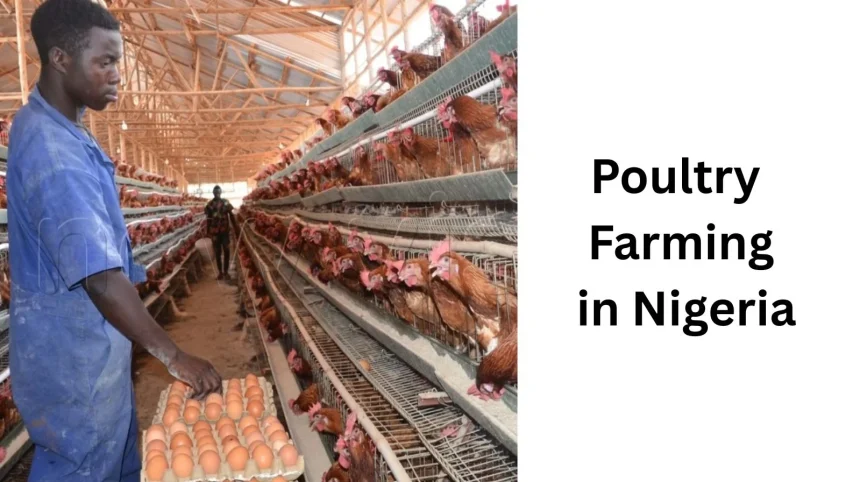
Poultry farming in Nigeria is one of the most established, high-demand, and financially rewarding agricultural businesses you can start today. From a small backyard operation raising 100 broilers to a full commercial layer farm producing thousands of eggs daily, the poultry industry offers opportunities at every level of capital and experience.
- What Is Poultry Farming?
- Is Poultry Business Profitable in Nigeria?
- Broilers vs. Layers: Which Should You Start With?
- Poultry Farming Requirements: What You Need Before You Start
- How to Build Your Poultry House in Nigeria
- Deep Litter System (Most Common for Broilers)
- Battery Cage System (Standard for Layers)
- Free-Range System
- Cost of Poultry Cages in Nigeria
- Price List of Poultry Equipment in Nigeria
- Sourcing Your Birds: Where to Buy Day-Old Chicks in Nigeria
- Reputable Hatcheries in Nigeria
- What to Look for When Buying Day-Old Chicks
- Day-Old Chick Prices in Nigeria (2026)
- Broiler Farming: Complete Step-by-Step Guide
- Step 1: Prepare the House (at least 1 week before chicks arrive)
- Step 2: Receive and Settle Your Chicks (Day 1)
- Step 3: Brooding Period (Week 1–2)
- Step 4: Growing Period (Week 3–5)
- Step 5: Pre-Harvest Period (Week 6–8)
- Layer Farming: Complete Step-by-Step Guide
- Feeding Your Poultry: Complete Diet and Schedule
- Commercial Feed vs. On-Farm Feed Mixing
- Broiler Feeding Programme
- Layer Feeding Programme
- Water Management
- Poultry Disease Management: Prevention and Treatment
- Newcastle Disease (ND)
- Gumboro Disease (Infectious Bursal Disease — IBD)
- Coccidiosis
- Fowl Typhoid / Salmonellosis
- Infectious Bronchitis (IB)
- Marek’s Disease
- General Disease Prevention Rules
- Vaccination Schedule for Broilers and Layers in Nigeria
- Seasonal Management: Harmattan vs. Rainy Season
- Monthly Farm Management Calendar
- Harvesting Broilers: When and How
- Egg Collection, Grading, and Storage
- How to Sell Your Poultry Products in Nigeria
- Record Keeping and Farm Management
- Flock Register
- Daily Mortality Record
- Feed Record
- Vaccination and Health Record
- Production Record (Layers)
- Sales Record
- Monthly Profit and Loss Summary
- Cost of Starting a Poultry Farm in Nigeria (Full Breakdown)
- Micro Starter Farm — 100 Broilers (Absolute Beginner)
- Small Commercial Broiler Farm — 500 Birds
- Small Commercial Layer Farm — 1,000 Birds
- Medium Commercial Layer Farm — 5,000 Birds
- Poultry Farm Profit: Realistic Earnings Projections
- Common Mistakes to Avoid
- Frequently Asked Questions About Poultry Farming in Nigeria
- Conclusion
This guide is written to be the only resource you need. By the time you finish reading, you will know exactly what type of birds to raise, how to house and feed them, how to manage disease outbreaks, how to calculate your costs, and how to sell your birds and eggs profitably — without needing to look anywhere else.
What Is Poultry Farming?
Poultry farming is the commercial raising of domesticated birds — primarily chickens — for meat, eggs, or both. In Nigeria, poultry farming is the largest and most commercialised livestock sub-sector, contributing significantly to the country’s food security and agricultural GDP.
The two main categories of poultry farming in Nigeria are:
Broiler farming — raising chickens specifically bred for fast meat production. Broilers reach market weight (1.8–2.5 kg) in just 6–8 weeks, making them one of the fastest-turning agricultural investments available.
Layer farming — raising hens specifically bred for high egg production. A good layer begins producing eggs at 18–22 weeks and lays consistently for 12–18 months, providing daily income throughout her productive life.
Other types of poultry raised in Nigeria include turkeys, ducks, guinea fowl, and quails, but broilers and layers dominate the commercial market and are the focus of this guide.
Is Poultry Business Profitable in Nigeria?
Yes — poultry farming is profitable in Nigeria, but it requires proper planning, consistent management, and a clear understanding of your costs and market. Here is why the opportunity is real:
Massive and growing demand. Nigeria’s population of over 220 million people consumes enormous quantities of chicken meat and eggs daily. Per capita egg and poultry meat consumption has risen steadily, yet local production still falls short of national demand. Nigeria imports frozen poultry products worth billions of naira every year to bridge the gap.
Fast return on investment. Broilers are harvested in 6–8 weeks — one of the shortest production cycles in agriculture. Layers begin paying back your investment through daily egg sales from week 18 onwards.
Multiple income streams. From broiler sales to eggs, spent layers, poultry manure (a premium organic fertiliser), and feathers, a well-run poultry farm generates income from several sources simultaneously.
Established market infrastructure. Unlike some newer agricultural ventures, the poultry market in Nigeria is mature. Buyers — from open-air market traders to supermarkets to fast food chains — are everywhere and actively looking for reliable suppliers.
Scalability. You can start with 50 broilers and scale to 5,000 birds using reinvested profits, without needing to completely rebuild your operation.
However, profitability is not automatic. Feed costs (which represent 65–75% of total production cost), disease management, and market timing are the three variables that determine whether a poultry farm succeeds or fails. This guide addresses all three in detail.
Broilers vs. Layers: Which Should You Start With?
This is the first and most important decision a new poultry farmer must make. Here is an honest comparison:
Broiler Farming
Broilers are chickens raised purely for meat. The most popular breeds in Nigeria are Arbor Acres, Marshall, Cobb 500, and Ross 308 — all fast-growing hybrids that reach 2–2.5 kg in 6–8 weeks.
Advantages of broiler farming:
- Fast turnover — you recover your investment in 6–8 weeks
- Lower initial housing cost (no need for laying cages)
- Simpler management compared to layers
- High demand, especially around festive seasons
- Can be started with very little space
Disadvantages of broiler farming:
- Income is not daily — you earn in one lump sum at harvest
- High feed cost relative to the short production period
- Very sensitive to disease and temperature fluctuations
- Market price fluctuates — if you harvest during a glut, prices drop
Best for: Beginners with limited capital, farmers who want fast cash turnover, anyone who can market birds aggressively during festive periods.
Layer Farming
Layers are hens bred for sustained egg production. The most popular breeds in Nigeria are Isa Brown, Lohmann Brown, Shika Brown (developed locally by NAPRI), and Hyline Brown.
Advantages of layer farming:
- Daily income from egg sales — the most consistent cash flow in poultry
- Long productive life (12–18 months of peak laying)
- Eggs are always in demand — no seasonal slump
- At end of lay, spent hens are sold for meat (dual income)
- Manure from layer houses is extremely valuable as organic fertiliser
Disadvantages of layer farming:
- Higher startup cost — battery cages are expensive
- Longer wait for first income (18–22 weeks from chick to first egg)
- More complex management (lighting programmes, calcium management)
- Requires more consistent daily attention than broilers
Best for: Farmers with slightly more capital, those who want steady daily income rather than periodic lump sums, farmers near urban markets with consistent egg demand.
Recommendation for Beginners
Start with broilers. The short production cycle teaches you poultry management fundamentals quickly, you recover your capital fast, and mistakes are less costly over 6–8 weeks than over 18+ months. After two or three successful broiler cycles, you will have the experience and profit base to transition into layers.
Poultry Farming Requirements: What You Need Before You Start
Land and Space
The space you need depends entirely on your chosen system and scale. As a guide:
- Deep litter system (broilers): Allow 0.1 square metre per bird. For 500 broilers, you need a house of at least 50 square metres (roughly 5m × 10m).
- Battery cage system (layers): Each cage tier holds 3–5 birds. A commercial layer house for 1,000 birds requires approximately 100–150 square metres of building space with cage stacking.
Poultry houses must be sited away from residential buildings (minimum 100 metres recommended for commercial operations) to reduce odour complaints and biosecurity risks.
Water
Poultry require constant access to clean, fresh water. A broiler drinks approximately 250–500 ml of water per day; a laying hen drinks 200–350 ml. Water must be clean — contaminated water is one of the leading causes of disease outbreaks on Nigerian poultry farms. If using borehole water, test it periodically for bacterial contamination.
Electricity
Poultry farming in Nigeria requires electricity for brooding lamps (heat for chicks), fans for ventilation, and lighting programmes for layers. Constant NEPA/PHCN supply is unreliable, so most serious poultry farmers invest in a generator or solar power backup. Factor this into your startup budget.
Biosecurity
Biosecurity means keeping disease out of your farm. It includes:
- Restricting visitors to the farm — no unauthorised entry into the poultry house
- Providing footbaths (water with disinfectant) at the entrance to every house
- Changing into farm-dedicated clothes and boots before entering the house
- Never bringing birds from unknown sources directly into your flock
- Disposing of dead birds properly (deep burial or incineration — never leave carcasses near the farm)
Biosecurity is not optional. It is the single most important disease prevention tool available to you, and it costs almost nothing.
How to Build Your Poultry House in Nigeria
A good poultry house protects your birds from rain, direct sun, predators, and extreme temperatures while providing adequate ventilation. Here are the main housing systems used in Nigeria:
Deep Litter System (Most Common for Broilers)
Birds are raised on the floor of the house on a bed of litter material — wood shavings, sawdust, or rice husks spread 5–10 cm deep. The litter absorbs droppings and moisture. This is the standard system for broiler production in Nigeria.
Construction guidelines for a deep litter broiler house:
- Orientation: Build the house facing east-west so the long sides face north and south. This maximises cross-ventilation and minimises direct sunlight entering the house.
- Walls: Build the lower walls (60–90 cm high) from cement blocks. Above that, use wire mesh panels or open-sided walls covered with shade netting for ventilation. In cooler regions (Jos, Maiduguri), install curtains on the mesh sides that can be closed during cold nights.
- Roofing: Use zinc (corrugated iron) or aluminium roofing sheets. Add a ceiling of wire mesh or plywood to reduce heat transfer from the roof to the birds. Roof overhang of at least 1 metre on all sides protects against rain splash and provides additional shade.
- Flooring: Cement floor, smooth and slightly sloped for drainage. Never use bare earth — it harbours disease organisms.
- Ventilation: Birds produce enormous amounts of ammonia from their droppings. Poor ventilation causes respiratory disease and poor growth. Open sides with adjustable curtains are the most effective low-cost ventilation system for Nigerian conditions.
Cost to build a deep litter broiler house (500-bird capacity): ₦300,000 – ₦700,000 depending on materials, location, and labour costs.
Battery Cage System (Standard for Layers)
Layers are housed in metal wire cages arranged in rows and tiers (usually 2–4 tiers high). Each cage compartment houses 3–5 birds. Eggs roll forward onto a collection trough when laid.
Battery cages are more expensive upfront but make management much easier — feeding, watering, egg collection, and health monitoring are all simplified. Manure falls through the cage floor onto collection trays or a pit below, keeping birds clean and dry.
Types of battery cages available in Nigeria:
- Locally fabricated cages: Made by local welders from galvanised wire. Cheaper (₦1,500–₦3,500 per bird space) but quality varies significantly.
- Imported cages (China/India): More consistent quality, better finish, longer lifespan. More expensive (₦3,000–₦6,000 per bird space) but worth the investment for large operations.
Free-Range System
Birds roam in an enclosed outdoor area with access to a sheltered house for sleeping and laying. Common in rural areas and for premium/organic egg production. Lower housing cost but higher land requirement, more disease exposure, and lower productivity. Not recommended for commercial-scale beginners.
Cost of Poultry Cages in Nigeria
Cage costs are one of the biggest startup expenses for layer farmers. Here is the current price landscape in Nigeria:
| Cage Type | Capacity per Unit | Price Range (₦) |
|---|---|---|
| Locally fabricated 3-tier cage | 90–120 birds | 80,000 – 150,000 |
| Locally fabricated 4-tier cage | 120–160 birds | 120,000 – 200,000 |
| Imported A-frame 3-tier cage | 90–120 birds | 150,000 – 250,000 |
| Imported A-frame 4-tier cage | 120–160 birds | 200,000 – 350,000 |
| Imported H-frame (battery) cage | 96–200 birds | 250,000 – 500,000 |
Cost per bird space (installed): ₦1,500 – ₦6,000 depending on cage type and supplier.
For 1,000 layers: Budget ₦1,500,000 – ₦6,000,000 for cages alone, depending on quality.
Where to buy poultry cages in Nigeria:
- Ikorodu Road and Ojo area, Lagos (local fabricators)
- Trade Fair Complex, Lagos (imported cage suppliers)
- Kaura Namoda Road, Kaduna (northern suppliers)
- Agiplain Road, Ibadan
- Major agro-input dealers in Onitsha, Enugu, and Port Harcourt
- Online: Jiji.ng, AgroMall, and poultry farming Facebook groups
Price List of Poultry Equipment in Nigeria
Every poultry farm needs a core set of equipment regardless of whether you are raising broilers or layers. Here is a comprehensive price list for 2026:
| Equipment | Description | Price Range (₦) |
|---|---|---|
| Day-old chick box brooder | Cardboard or wooden box for first-week brooding | 2,000 – 8,000 |
| Electric brooding lamp | 250W infrared bulb and holder | 3,000 – 8,000 per unit |
| Gas brooder | Propane-powered brooder for large-scale brooding | 25,000 – 80,000 |
| Plastic chick feeder (round) | For chicks 0–2 weeks | 800 – 2,000 each |
| Tube feeder (hanging) | For growers and adults | 2,500 – 6,000 each |
| Trough feeder (metal/plastic) | For cage or floor feeding | 1,500 – 4,000 each |
| Plastic bell drinker | Automatic gravity drinker | 2,000 – 5,000 each |
| Nipple drinker line | Automated nipple drinking system | 15,000 – 60,000 per line |
| Egg tray (plastic) | 30-egg capacity | 500 – 1,200 each |
| Egg crate (cardboard) | 30-egg disposable | 150 – 350 each |
| Digital weighing scale | For weighing birds and feed | 8,000 – 25,000 |
| Spray pump/knapsack sprayer | For disinfecting the house | 8,000 – 20,000 |
| Thermometer | For monitoring house temperature | 3,000 – 10,000 |
| Hygrometer | For monitoring humidity | 3,000 – 12,000 |
| Generator (2.5–5 KVA) | Power backup for lighting and brooding | 120,000 – 350,000 |
| Exhaust fan | Ventilation for enclosed houses | 25,000 – 80,000 per unit |
| Feed storage bin/silo | For storing feed bags | 15,000 – 60,000 |
| Protective overall/boots | Biosecurity clothing | 5,000 – 15,000 per set |
| Footbath basin | Disinfectant entry point | 2,000 – 5,000 |
| Wheelbarrow | For litter and manure removal | 15,000 – 30,000 |
Minimum starter equipment budget (500 broilers): ₦80,000 – ₦180,000 Minimum starter equipment budget (1,000 layers, battery cage): ₦200,000 – ₦500,000 (excluding cages)
Sourcing Your Birds: Where to Buy Day-Old Chicks in Nigeria
The quality of your day-old chicks determines everything. Poor-quality chicks from unreliable hatcheries lead to high mortality, poor growth, and low egg production — no matter how well you manage them afterward.
Reputable Hatcheries in Nigeria
Chi Farms (Amo Byng) — One of Nigeria’s largest integrated poultry companies. Supplies Arbor Acres broiler chicks and Isa Brown layer chicks. Located in Ogun State. Branches across Nigeria.
Obasanjo Farms — Major hatchery in Ogun State supplying both broiler and layer chicks. Long-established reputation for quality.
Zartech Ltd — Based in Ibadan, Oyo State. One of the most respected hatcheries in Nigeria for both broilers and layers.
Ajanla Farms — Ogun State. Supplies broiler and layer chicks across southwest Nigeria.
Fidan — Northern Nigeria supplier based in Kaduna. Reliable for farmers in the north.
NAPRI (National Animal Production Research Institute) — Zaria, Kaduna. Supplies the locally developed Shika Brown layer breed, which is well-adapted to Nigerian conditions.
Agricultural Development Programme (ADP) offices in each state also maintain lists of registered hatcheries in their region.
What to Look for When Buying Day-Old Chicks
- Chicks must be active, alert, and cheeping vigorously
- Eyes must be bright and clear — no cloudiness or discharge
- Navels must be clean and fully healed — no open or bleeding navels
- Legs must be straight — no crooked or splayed legs
- Down feathers must be clean, dry, and fluffy — no pasting around the vent
- All chicks in a batch must be uniform in size
- Request the vaccination certificate — reputable hatcheries vaccinate chicks against Marek’s disease before sale
Day-Old Chick Prices in Nigeria (2026)
| Bird Type | Price per Chick (₦) |
|---|---|
| Broiler (Arbor Acres, Cobb, Ross) | 550 – 900 |
| Layer (Isa Brown, Lohmann Brown) | 500 – 850 |
| Shika Brown layer (NAPRI) | 400 – 700 |
| Turkey poult | 1,500 – 3,500 |
Prices vary by hatchery, location, and season. Chick prices typically rise during high-demand periods (before Christmas, Easter, and Sallah).
Broiler Farming: Complete Step-by-Step Guide
Step 1: Prepare the House (at least 1 week before chicks arrive)
- Thoroughly clean the house — sweep, scrub walls and floor with detergent, rinse well.
- Fumigate: Mix formalin (40% formaldehyde) with potassium permanganate inside the closed house for 24 hours, then ventilate for 48 hours. Alternatively, spray the house with a commercial poultry disinfectant (Virkon S, TH4+, or Bioguard are widely available in Nigeria).
- Allow the house to rest empty for at least 3–5 days after fumigation before introducing chicks.
- Spread fresh wood shavings or sawdust 5–8 cm deep across the floor. Never use treated wood shavings.
- Set up the brooding area: Create a circular brooding ring using cardboard (50–60 cm tall) to prevent chicks from straying far from heat in the first week. Place the brooding lamp in the centre.
- Pre-heat the brooding area for at least 4 hours before chicks arrive. Target temperature: 32–35°C at chick level for the first week.
Step 2: Receive and Settle Your Chicks (Day 1)
- Receive chicks early in the morning to minimise stress.
- Immediately provide clean, slightly warm (25°C) drinking water. Add vitamins and electrolytes (Vitastress, Aquavit) to the water on arrival day — this combats transport stress.
- Place chick mash in shallow trays or egg tray lids (not deep feeders) for the first 3 days so chicks can access feed easily.
- Observe chick behaviour: If chicks are evenly spread under the lamp, temperature is correct. If they crowd directly under the lamp, they are too cold — lower the lamp. If they move to the edges away from the lamp, they are too hot — raise the lamp.
- Count chicks and record any dead-on-arrivals (DOAs) immediately. Report DOAs to your hatchery within 24 hours for replacement.
Step 3: Brooding Period (Week 1–2)
The brooding period is the most critical phase of broiler production. More chicks are lost in the first two weeks than at any other time.
Temperature management:
- Week 1: 32–35°C
- Week 2: 28–32°C
- Reduce temperature by approximately 3°C per week until house temperature is reached
Litter management: Stir the litter daily to prevent caking. Caked litter produces ammonia which damages birds’ respiratory systems and predisposes them to disease. Add fresh litter whenever the existing litter becomes wet.
Feeding and watering: Provide feed and water at all times (ad libitum feeding). Chicks in the first two weeks must never run out of feed or water, even briefly.
Expand the brooding ring at day 5–7 to give chicks more room. Remove the brooding ring entirely by day 10–14.
Step 4: Growing Period (Week 3–5)
By week 3, broilers are feathering up and temperature regulation is less critical. Management now focuses on feed intake and growth rate.
- Switch from broiler starter feed to broiler finisher feed at week 3 (or follow your feed manufacturer’s recommendation).
- Ensure adequate feeder and drinker space — competition for feed and water causes uneven growth and increases stress.
- Weigh a sample of 20–30 birds weekly to track average weight against your breed’s standard weight chart. If birds are underweight, review feed quality and quantity.
- Maintain good ventilation — as birds grow, body heat and ammonia production increase dramatically. Open the house sides more during the day and close at night during cold weather.
Step 5: Pre-Harvest Period (Week 6–8)
- Broilers are typically ready for harvest at 6–8 weeks when they reach 1.8–2.5 kg live weight.
- Withdraw feed 6–8 hours before slaughter (water withdrawal is not recommended as it causes stress and poor carcass quality). This empties the digestive tract, reducing contamination during processing.
- Do not handle birds roughly in the days before harvest — bruising reduces carcass value significantly.
- Arrange your buyers before harvest day. Never harvest without confirmed buyers lined up.
Layer Farming: Complete Step-by-Step Guide
Layer farming has three distinct phases: the brooding phase (0–8 weeks), the growing/pullet phase (8–18 weeks), and the laying phase (18–72+ weeks).
Phase 1: Brooding (Week 0–8)
Brooding layer chicks follows the same principles as broiling chicks in terms of temperature management, litter (if floor brooding), and initial feeding. Key differences:
- Layer chicks are typically brooded on the floor with deep litter for the first 8 weeks before being transferred to battery cages.
- Feed layer chick mash (chick starter formulated for layers — lower energy, higher protein than broiler starter).
- Begin the beak trimming procedure at 7–10 days of age. Beak trimming prevents feather pecking and cannibalism, which are serious problems in layer flocks. Use a commercial debeaker or a hot blade. Trim the upper beak only, removing one third. This is a standard industry practice in Nigeria.
Phase 2: Pullet Rearing (Week 8–18)
At 8 weeks, transfer pullets to battery cages if using the cage system. This is a stressful transition — handle birds gently and minimise disturbance for several days after transfer.
- Switch to grower/pullet mash — lower protein and calcium than layer mash. High calcium before 18 weeks damages the kidneys of young pullets.
- Light management is critical: Keep lighting at 8 hours per day during the growing phase. Do not increase light duration during the pullet phase — premature stimulation causes early, small-egg production and reduces lifetime output.
- Weigh a sample of birds weekly and compare to your breed’s standard weight chart. Underweight pullets at point of lay will produce small eggs and have lower peak production.
Phase 3: Production (Week 18–72+)
- At 18–20 weeks, gradually introduce layer mash (high calcium — 3.5–4% calcium to support eggshell formation).
- Simultaneously increase light to 16 hours per day (natural + artificial). This light stimulation triggers egg production. Maintain 16 hours of light consistently throughout the laying period — do not reduce it. Any reduction in light duration causes a drop in egg production.
- Peak production (80–95% lay rate) is typically reached at 26–30 weeks and maintained for 3–6 months with good management.
- Collect eggs at least twice daily — morning and afternoon. More frequent collection reduces breakage and dirty eggs.
- At 72–80 weeks, egg production naturally declines below economic viability. At this point, sell the spent hens for meat (they are still marketable as “old layer” chicken, popular in Nigerian soups) and prepare the house for a new flock.
Feeding Your Poultry: Complete Diet and Schedule
Feed represents 65–75% of your total production cost. Getting feeding right is the single most important management skill in poultry farming.
Commercial Feed vs. On-Farm Feed Mixing
Commercial feed (pre-mixed): The simplest option for beginners. Buy bags of ready-mixed broiler starter, broiler finisher, chick mash, grower mash, or layer mash from reputable manufacturers. In Nigeria, the most trusted brands include:
- Vital Feed (Grand Cereals)
- Hybrid Feeds (Chi Farms)
- Chikun Feeds
- Top Feeds
- Durante Feeds
- Zartech Feeds
On-farm feed mixing: Experienced farmers with access to raw materials mix their own feed. This can reduce feed costs by 15–30% but requires knowledge of feed formulation and access to quality raw materials (maize, soya bean meal, fishmeal, bone meal, vitamins, minerals). Not recommended for beginners — start with commercial feed and learn mixing after your first two successful cycles.
Broiler Feeding Programme
| Phase | Feed Type | Age | Protein % | Daily Intake per Bird |
|---|---|---|---|---|
| Starter | Broiler Starter | Day 1 – Day 14 | 22–24% | 15–40g (increasing daily) |
| Grower | Broiler Grower | Day 15 – Day 28 | 20–22% | 60–90g |
| Finisher | Broiler Finisher | Day 29 – Harvest | 18–20% | 100–150g |
Total feed consumption per broiler (0–8 weeks): Approximately 3.5–4.5 kg Feed Conversion Ratio (FCR): A well-managed broiler should convert 1.7–2.0 kg of feed into 1 kg of live weight.
Layer Feeding Programme
| Phase | Feed Type | Age | Protein % | Daily Intake per Hen |
|---|---|---|---|---|
| Chick | Chick Starter (Layer) | Week 1–8 | 18–20% | 15–50g |
| Grower | Pullet Grower | Week 8–18 | 15–17% | 60–80g |
| Pre-layer | Pre-layer Mash | Week 16–18 | 17% | 80–100g |
| Layer | Layer Mash | Week 18–72+ | 16–18% | 110–130g |
Calcium is critical for layers. Laying hens need 3.5–4g of calcium daily for eggshell formation. If your layer mash does not provide enough calcium, supplement with crushed oyster shell or limestone grit provided free-choice in a separate container.
Water Management
Clean water must be available at all times. Never restrict water — even brief water deprivation causes a drop in egg production that takes days to recover.
- Wash and disinfect drinkers every day.
- Add apple cider vinegar (5ml per litre) to water twice weekly — it reduces gut pH, inhibits bacterial growth, and improves feed conversion.
- During hot weather or disease challenges, add electrolytes and vitamins to the water.
- During vaccination, provide plain water with no additives for 24 hours before and after — additives can inactivate live vaccines.
Poultry Disease Management: Prevention and Treatment
Disease is the number one cause of losses on Nigerian poultry farms. Most diseases are preventable through vaccination, biosecurity, and good management. Here are the main diseases affecting broilers and layers in Nigeria:
Newcastle Disease (ND)
The most feared poultry disease in Nigeria. Highly contagious and can kill an entire unvaccinated flock within days.
Symptoms: Sudden death, twisted neck (torticollis), greenish diarrhoea, gasping, complete cessation of egg production in layers, drooping wings.
Prevention: Vaccination (see Vaccination Schedule section). Newcastle disease is entirely preventable in vaccinated flocks.
Treatment: No cure. Vaccinate preventively — do not wait for an outbreak.
Gumboro Disease (Infectious Bursal Disease — IBD)
A highly contagious viral disease affecting chicks at 3–6 weeks of age. Destroys the bursa of Fabricius — the primary immune organ of young birds — leaving them vulnerable to all other diseases.
Symptoms: Sudden drop in feed and water intake, watery white diarrhoea, ruffled feathers, reluctance to move, birds sitting with closed eyes and hunched posture.
Prevention: Vaccination at day 14 and day 21.
Treatment: No cure. Supportive care only — provide electrolytes, vitamins (especially Vitamin C), and antibiotics to prevent secondary bacterial infections.
Coccidiosis
A parasitic disease caused by Eimeria species. One of the most common and economically damaging diseases on Nigerian poultry farms, particularly in deep litter systems.
Symptoms: Bloody diarrhoea, pale combs, weight loss, high mortality in young birds (3–8 weeks).
Prevention: Keep litter dry. Use coccidiostats (Amprolium, Salinomycin) in starter feed. Avoid overcrowding.
Treatment: Amprolium (Amprol, Coxoid) in drinking water for 5–7 days. Follow with vitamins to aid recovery.
Fowl Typhoid / Salmonellosis
Bacterial disease causing high mortality, particularly in young chicks.
Symptoms: Droopiness, yellowish-green diarrhoea, sudden death, reduced feed intake.
Prevention: Source chicks from Salmonella-free hatcheries. Strict biosecurity. Disinfect water.
Treatment: Enrofloxacin (Baytril), Oxytetracycline, or Ciprofloxacin under veterinary guidance.
Infectious Bronchitis (IB)
Viral respiratory disease affecting both broilers and layers.
Symptoms: In broilers — coughing, sneezing, rattling. In layers — sharp drop in egg production, soft-shelled or misshapen eggs, watery egg whites.
Prevention: Vaccination (IB vaccine is included in most Nigerian poultry vaccination programmes).
Treatment: No cure. Antibiotics to control secondary bacterial infections.
Marek’s Disease
Viral disease causing tumours, paralysis, and death. Particularly affects layers.
Prevention: Vaccination at the hatchery (day old). This is standard at all reputable Nigerian hatcheries.
Treatment: No treatment. Prevention through vaccination is the only option.
General Disease Prevention Rules
- Follow your vaccination schedule religiously — never skip or delay a vaccine.
- Remove and isolate sick birds immediately. A sick bird that stays in the flock spreads disease to healthy birds.
- Dispose of dead birds by deep burial (at least 1 metre deep) or incineration. Never leave dead birds near the farm.
- Change clothes and wash hands before entering the poultry house.
- Do not allow visitors, wild birds, rats, or stray animals near your birds.
- Always have a relationship with a veterinary officer before you need one — not during a crisis.
- Contact the nearest state Ministry of Agriculture or the Federal Department of Veterinary and Pest Control Services for subsidised veterinary support.
Vaccination Schedule for Broilers and Layers in Nigeria
Broiler Vaccination Schedule
| Age | Vaccine | Disease | Route |
|---|---|---|---|
| Day 1 (hatchery) | Marek’s vaccine | Marek’s disease | Injection |
| Day 7–10 | Newcastle Disease (Lasota strain) | Newcastle disease | Eye drop or drinking water |
| Day 14 | Gumboro (IBD) vaccine | Gumboro disease | Drinking water |
| Day 21 | Gumboro booster | Gumboro disease | Drinking water |
| Day 24–28 | Newcastle Disease booster | Newcastle disease | Drinking water |
Layer Vaccination Schedule
| Age | Vaccine | Disease | Route |
|---|---|---|---|
| Day 1 (hatchery) | Marek’s vaccine | Marek’s disease | Injection |
| Day 7 | Newcastle Disease (Lasota) | Newcastle disease | Eye drop |
| Day 14 | Gumboro (IBD) | Gumboro disease | Drinking water |
| Day 21 | Gumboro booster | Gumboro disease | Drinking water |
| Day 28 | Newcastle booster (Lasota) | Newcastle disease | Drinking water |
| Week 6 | Fowl Pox vaccine | Fowl pox | Wing web stab |
| Week 8 | Infectious Bronchitis (IB) | Infectious bronchitis | Drinking water or eye drop |
| Week 12 | Newcastle (Komarov or Clone) | Newcastle disease | Intramuscular injection |
| Week 16 | Newcastle booster | Newcastle disease | Drinking water |
| Every 3 months (in production) | Newcastle (Lasota) | Newcastle disease | Drinking water |
Important vaccination rules:
- Always use cold-chain vaccines — transport in a cooler with ice packs and use within the time specified on the pack after opening.
- Vaccinate only healthy birds — never vaccinate a sick flock.
- Do not add vitamins, disinfectants, or antibiotics to drinking water for 24 hours before or after a live vaccine administration.
- Keep records of every vaccination: date, vaccine brand, batch number, and number of birds vaccinated.
Seasonal Management: Harmattan vs. Rainy Season
Nigeria’s two distinct seasons create very different management challenges for poultry farmers.
Harmattan Season (November – March)
The dry, cold, and dusty Harmattan wind — especially in northern and inland Nigeria — stresses poultry in several ways: dust irritates respiratory systems, cold nights (especially in the north) chill chicks, and dry conditions cause dehydration.
Harmattan management checklist:
- Close the sides of the poultry house with curtains or polythene sheeting from dusk to mid-morning to retain warmth.
- Increase brooding temperature for young chicks — Harmattan nights can drop to 15°C in some parts of Nigeria.
- Add Vitamin C (1g per litre of water) to combat cold stress.
- Clean dust from feed and water equipment more frequently.
- Monitor birds for respiratory signs (coughing, sneezing) — dust-induced respiratory irritation can quickly become secondary bacterial bronchitis.
- Ensure litter does not become too dry and dusty — dry litter generates ammonia and fine dust particles that damage lungs.
Rainy Season (April – October)
The rainy season brings high humidity and warm temperatures — ideal for most poultry. However, it also brings risks:
- Wet litter: Rain splash through open sides and high humidity causes litter to become wet and caked rapidly. Wet litter produces ammonia and promotes coccidiosis. Stir and replace litter more frequently during the rains.
- Fungal contamination of feed: Wet weather promotes mould growth in feed. Buy feed more frequently in smaller quantities rather than storing large stocks. Never feed mouldy feed — mycotoxins from mould cause liver damage and immunosuppression.
- Flooding: Ensure your poultry house is built on raised ground with good drainage. Flooding causes massive losses.
- Newcastle disease outbreaks: Newcastle tends to peak at the start and end of the rainy season in Nigeria. Ensure booster vaccinations are up to date during these transition periods.
Monthly Farm Management Calendar
| Month | Key Tasks |
|---|---|
| January | Harmattan management — close house sides at night, monitor respiratory health, increase Vitamin C supplementation |
| February | Continue Harmattan protocols, clean and repair equipment, plan next broiler cycle or layer flock rotation |
| March | Prepare house for new flock (if cycling broilers), begin opening house sides during warmer afternoons |
| April | Rainy season begins — inspect drainage, increase litter management frequency, check for wet spots |
| May | Monitor for coccidiosis (wet litter season), review vaccination schedule, weigh birds for growth tracking |
| June | Peak humidity — increase ventilation, check feed for mould, monitor egg production in layers for any drops |
| July | Mid-year review — calculate profitability to date, assess feed inventory, order supplies for second half |
| August | Begin pre-harvest planning for broilers targeting Christmas market, assess layer flock age and production rate |
| September | Broiler batch planning for December harvest, de-worm if applicable, assess layer house for pre-Harmattan repairs |
| October | Begin selective broiler harvesting, prepare for peak festive market, boost layer flock nutrition for maximum output |
| November | Harmattan preparation — stock up on vitamins and disinfectants, seal house gaps, administer Newcastle booster |
| December | Peak selling season for broilers and eggs — harvest, sell, and record all transactions for year-end review |
Harvesting Broilers: When and How
When Are Broilers Ready?
Broilers are ready for harvest when they reach your target live weight — typically 1.8–2.5 kg at 6–8 weeks of age. Do not wait longer than 8–9 weeks in Nigerian conditions — feed conversion deteriorates sharply after this point and heat stress risk increases.
Weigh a sample of 20–30 birds before deciding on harvest date. Calculate the average live weight and compare to your target market weight. If the average is below target, give the flock another 5–7 days and re-weigh.
Harvesting Process
The night before harvest:
- Withdraw feed 6–8 hours before slaughter (continue providing water until 2 hours before).
- Dim the house lights to calm birds and make catching easier.
- Arrange your buyers or transport to slaughter market. Do not harvest without confirmed demand.
Catching and loading:
- Catch birds at night or in early morning (cooler temperatures reduce stress and mortality).
- Handle birds by both legs — never by one wing.
- Load into well-ventilated crates. Do not overpack — maximum 8–10 birds per standard crate in Nigerian heat.
- Transport to buyer or market as early in the morning as possible.
Weighing and selling:
- Weigh birds in crates (subtract crate weight) or individually.
- Keep records of total live weight sold, price per kg, and buyer details.
After Harvest: House Preparation
After every broiler cycle, the house must be thoroughly cleaned before a new batch of chicks arrives:
- Remove all litter and dispose of it (sell as organic fertiliser — it is valuable).
- Sweep and scrub all surfaces.
- Wash with high-pressure water.
- Apply disinfectant spray (Virkon S or equivalent).
- Allow the house to rest empty for at least 2 weeks before the next batch.
This rest period — called the downtime — is critical. It breaks the disease cycle and dramatically reduces the risk of the next flock inheriting pathogens from the previous one.
Egg Collection, Grading, and Storage
Egg Collection
Collect eggs at least twice daily — ideally three times (morning, midday, and afternoon). More frequent collection reduces:
- Cracked and broken eggs
- Dirty eggs (from hens sitting on them)
- Egg eating behaviour (a vice that spreads rapidly in a flock)
Handle eggs gently. Place them in clean egg trays, pointed end down.
Egg Grading
Sort your eggs by size and quality before selling. Nigerian buyers and institutional buyers (supermarkets, bakeries, hotels) pay more for consistently graded eggs.
Standard egg grades:
| Grade | Weight | Description |
|---|---|---|
| Extra Large (XL) | 63g+ | Premium price |
| Large (L) | 53–62g | Standard commercial price |
| Medium (M) | 43–52g | Slightly lower price |
| Small (S) | Below 43g | Sell at discount or use in-house |
Also separate:
- Cracked eggs: Sell immediately at a discount or use for personal consumption. Do not store cracked eggs.
- Dirty eggs: Wipe with a dry cloth. Do not wash eggs — washing removes the protective cuticle and accelerates spoilage.
- Blood spots or abnormal eggs: Remove and discard or use personally.
Egg Storage
- Store eggs in a cool, dry, well-ventilated room.
- Ideal storage temperature: 15–18°C (room temperature in most of Nigeria is acceptable for up to 2 weeks if the eggs are fresh).
- Refrigerate eggs if storing longer than 2 weeks.
- Never store eggs near strong-smelling substances — eggshells are porous and absorb odours.
- Stack egg trays no more than 5 high to prevent crushing.
- Rotate stock — always sell oldest eggs first (FIFO: First In, First Out).
How to Sell Your Poultry Products in Nigeria
Having great birds and fresh eggs means nothing without an organised selling strategy. Here are all the channels available to you:
Selling Live Broilers
Market traders and abattoirs: The fastest and simplest channel. Bring live birds to your nearest poultry market (every major Nigerian city has one) and sell to traders who slaughter and retail the chicken. Price is per kg live weight.
Direct sales to consumers: Set up a simple slaughter point at your farm or a nearby location. Sell dressed (slaughtered and cleaned) chicken directly to households and restaurants at a 20–40% premium over live-bird market price.
Restaurants and food businesses: Approach the kitchen or purchasing manager of local restaurants, bukkas, fast food outlets, and event caterers. Offer a consistent weekly or bi-weekly supply of fresh dressed chicken. Restaurants pay well for reliable, quality supply.
Hotels and supermarkets: Premium channel requiring packaged, labelled chicken. Requires NAFDAC registration for processed/packaged poultry but gives you access to the highest prices.
Festive season strategy: Broiler prices rise 30–60% in the weeks before Christmas, Easter, and Eid. Plan your production cycles so you have birds ready for harvest 1–2 weeks before each major festive period. This single strategy dramatically improves broiler farm profitability.
Selling Eggs
Egg retailers (market women): The most common channel. Sell by the crate (30 eggs) to retailers who sell individually. Prices vary by location and season.
Supermarkets and grocery stores: Supply packaged, graded eggs. More paperwork but higher prices and consistent volume.
Bakeries and confectioneries: Bakeries are major egg consumers. Approach local bakeries with a consistent supply offer — they value reliability over price.
Schools, hospitals, and institutions: Bulk buyers. Government contracts through procurement offices can be extremely lucrative for large-scale egg producers.
Online and WhatsApp sales: Many egg farmers in Lagos, Abuja, Port Harcourt, and Ibadan now supply directly to households via WhatsApp. Set up a WhatsApp Business profile, build a customer list, and offer weekly delivery.
Current Market Prices in Nigeria (2026)
| Product | Price Range (₦) |
|---|---|
| Live broiler (per kg) | 2,500 – 4,500 |
| Dressed chicken (per kg) | 4,000 – 7,000 |
| Eggs (per crate of 30) | 2,500 – 4,500 |
| Spent layer hen (per bird) | 2,000 – 4,500 |
| Poultry manure (per bag) | 500 – 1,500 |
Prices vary significantly by location (urban vs. rural), season, and buyer type.
Selling Poultry Manure
Do not overlook this income stream. Layer and broiler manure is one of the most valued organic fertilisers in Nigeria, sought by vegetable farmers, crop farmers, and fish pond operators. A bag of dried poultry manure sells for ₦500–₦1,500. A 1,000-bird layer farm produces hundreds of bags of manure annually — adding meaningfully to your bottom line.
Record Keeping and Farm Management
Poor record keeping destroys poultry farm profitability. You cannot control what you do not measure. Keep a dedicated farm register (notebook or spreadsheet) with the following:
Flock Register
- Date chicks arrived
- Number of chicks received
- Breed and hatchery source
- Number of dead-on-arrivals
- Purchase price per chick
Daily Mortality Record
- Number of birds that died each day
- Probable cause (if known)
- Cumulative mortality percentage
Feed Record
- Bags of feed purchased (date, brand, quantity, price)
- Daily feed consumption (weigh feed added minus feed remaining)
- Cumulative feed cost
Vaccination and Health Record
- Date of each vaccination
- Vaccine brand and batch number
- Disease treatments administered
Production Record (Layers)
- Eggs collected per day
- Broken and cracked eggs
- Egg sales (date, quantity, price, buyer)
Sales Record
- Date of sale
- Quantity sold (kg or number)
- Price per unit
- Buyer name and contact
- Total revenue
Monthly Profit and Loss Summary
At the end of each month, total your revenue and subtract all expenses. Track this religiously. If your monthly profit is declining, your records will show exactly why — whether it is rising feed costs, increasing mortality, or falling egg prices.
Cost of Starting a Poultry Farm in Nigeria (Full Breakdown)
Micro Starter Farm — 100 Broilers (Absolute Beginner)
| Item | Cost (₦) |
|---|---|
| Construction of simple deep litter house (bamboo/wood) | 50,000 – 120,000 |
| 100 day-old broiler chicks | 60,000 – 90,000 |
| Feed (broiler starter + finisher, 6 weeks) | 80,000 – 120,000 |
| Vaccines and medications | 10,000 – 20,000 |
| Equipment (feeders, drinkers, brooding lamp) | 15,000 – 30,000 |
| Litter material (wood shavings) | 5,000 – 10,000 |
| Miscellaneous (disinfectant, vitamins, transport) | 10,000 – 20,000 |
| Total | ₦230,000 – ₦410,000 |
Small Commercial Broiler Farm — 500 Birds
| Item | Cost (₦) |
|---|---|
| Construction of semi-permanent deep litter house | 300,000 – 600,000 |
| 500 day-old broiler chicks | 300,000 – 450,000 |
| Feed (starter + finisher, 6–8 weeks) | 400,000 – 600,000 |
| Vaccines and medications | 30,000 – 60,000 |
| Equipment (feeders, drinkers, brooders, generator) | 80,000 – 150,000 |
| Litter material | 15,000 – 25,000 |
| Miscellaneous | 30,000 – 60,000 |
| Total | ₦1,155,000 – ₦1,945,000 |
Small Commercial Layer Farm — 1,000 Birds
| Item | Cost (₦) |
|---|---|
| Construction of permanent layer house | 500,000 – 1,200,000 |
| Battery cages (1,000-bird capacity) | 1,500,000 – 4,000,000 |
| 1,000 day-old layer chicks | 500,000 – 850,000 |
| Feed (chick + grower + layer, 0–52 weeks) | 1,500,000 – 2,500,000 |
| Vaccines and medications | 80,000 – 150,000 |
| Equipment (feeders, drinkers, lighting, generator) | 200,000 – 500,000 |
| Miscellaneous | 100,000 – 200,000 |
| Total | ₦4,380,000 – ₦9,400,000 |
Medium Commercial Layer Farm — 5,000 Birds
| Item | Cost (₦) |
|---|---|
| Land lease (1 year) | 200,000 – 800,000 |
| Permanent layer house construction | 2,000,000 – 5,000,000 |
| Battery cages | 7,500,000 – 20,000,000 |
| 5,000 day-old layer chicks | 2,500,000 – 4,250,000 |
| Feed (full cycle) | 7,500,000 – 12,500,000 |
| Vaccines, medications, veterinary | 400,000 – 750,000 |
| Equipment and infrastructure | 800,000 – 2,000,000 |
| Labour (2 farm workers, 12 months) | 600,000 – 1,200,000 |
| Total | ₦21,500,000 – ₦46,500,000 |
Poultry Farm Profit: Realistic Earnings Projections
Broiler Farm Profit — 500 Birds per Cycle
| Item | Value |
|---|---|
| Number of birds | 500 |
| Mortality (5%) | 25 birds |
| Birds sold | 475 |
| Average live weight | 2.2 kg |
| Total live weight | 1,045 kg |
| Price per kg (live bird) | ₦3,000 |
| Gross revenue | ₦3,135,000 |
| Total production cost | ₦1,500,000 – ₦1,800,000 |
| Net profit per cycle | ₦1,335,000 – ₦1,635,000 |
| Cycles per year | 5 (every 10 weeks including downtime) |
| Annual net profit | ₦6,675,000 – ₦8,175,000 |
Layer Farm Profit — 1,000 Birds (Year 2, Full Production)
| Item | Value |
|---|---|
| Number of laying hens | 950 (after 5% mortality) |
| Average lay rate | 85% |
| Eggs per day | 808 eggs |
| Eggs per month | 24,240 eggs = 808 crates |
| Price per crate | ₦3,500 |
| Monthly gross revenue (eggs) | ₦2,828,000 |
| Monthly feed cost (950 hens × 120g × 30 days × ₦300/kg) | ₦1,026,000 |
| Other monthly costs (labour, medication, utilities) | ₦200,000 – ₦350,000 |
| Monthly net profit | ₦1,452,000 – ₦1,602,000 |
| Annual net profit (eggs only) | ₦17,424,000 – ₦19,224,000 |
| Additional: spent hen sales at end of cycle | ₦1,900,000 – ₦4,275,000 |
| Additional: manure sales | ₦500,000 – ₦1,500,000 |
These figures are projections based on current Nigerian market prices. Actual results depend on feed cost fluctuations, disease management, market access, and management quality.
Common Mistakes to Avoid
1. Buying cheap, low-quality chicks. The cheapest chicks from unreliable sources cost you more in the end through high mortality and poor performance. Always buy from reputable, registered hatcheries.
2. Skipping or delaying vaccination. Newcastle disease alone can wipe out an entire unvaccinated flock in 3–5 days. Follow your vaccination schedule without exception.
3. Poor ventilation. Ammonia buildup from droppings is invisible but lethal. It damages lung tissue, suppresses immunity, and directly causes respiratory disease. If you can smell ammonia when you enter the house, your ventilation is already inadequate.
4. Overcrowding. Overcrowding causes stress, competition for feed and water, increased disease transmission, and reduced growth and egg production. Never exceed recommended stocking densities.
5. Using poor-quality or mouldy feed. Mouldy feed contains mycotoxins — silent killers that cause liver damage, immunosuppression, and reduced egg production. Buy fresh feed and never store more than 2–3 weeks’ supply at a time.
6. No downtime between broiler flocks. Moving a new flock into a house immediately after the previous one leaves is the fastest way to build up disease pressure. Always allow a minimum 2-week rest and clean period between batches.
7. No relationship with a veterinarian. Many Nigerian poultry farmers only seek veterinary help after half their flock has died. Find a poultry veterinarian in your area before you need one. Early diagnosis saves flocks.
8. Harvesting without a confirmed buyer. Broilers do not stop eating while you look for buyers. Every extra day past harvest weight costs you feed money. Have your buyers lined up before you start each cycle.
9. Inadequate capital planning. Many beginners run out of money midway through a production cycle — typically just before harvest. Calculate your total cost before you start and ensure you have full funding plus a 20% contingency buffer.
10. Ignoring record keeping. Without records, you are farming blind. You cannot know your actual cost per kg of chicken, your real mortality rate, or whether your farm is genuinely profitable. Start records from day one.
Frequently Asked Questions About Poultry Farming in Nigeria
A beginner broiler farm with 100 birds costs ₦230,000–₦410,000. A small commercial broiler farm with 500 birds costs ₦1.1M–₦1.9M. A 1,000-bird layer farm costs ₦4.4M–₦9.4M including cages and feed for the first year.
Yes, when properly managed. A 500-bird broiler farm can generate ₦1.3M–₦1.6M net profit per cycle, with 5 cycles per year possible. A 1,000-bird layer farm can generate ₦1.4M–₦1.6M net profit per month in full production.
6–8 weeks in Nigerian conditions with good feeding and management.
Between 18–22 weeks of age, depending on breed, nutrition, and light management.
Arbor Acres, Cobb 500, and Marshall are the most popular and widely available in Nigeria. All three perform well under Nigerian conditions.
Isa Brown and Lohmann Brown are the most common. The locally developed Shika Brown (from NAPRI, Zaria) is excellent for farmers in northern Nigeria.
Chi Farms, Zartech, Obasanjo Farms, Ajanla Farms, and NAPRI are the most reputable sources. Your state ADP office also maintains a list of registered hatcheries.
A well-managed layer produces 280–320 eggs per year during her peak laying period (weeks 26–72).
Vaccination is the only reliable protection. Follow the recommended vaccination schedule and administer Newcastle booster vaccines every 3 months throughout the laying period.
Isolate affected birds immediately. Do not move any birds off the farm. Contact a veterinary officer immediately. Do not attempt to self-diagnose and treat a mass mortality event — call a professional.
Yes, on a small scale (50–200 birds). Ensure adequate ventilation, maintain biosecurity, and check with your local government on any zoning restrictions for livestock in residential areas.
Conclusion
Poultry farming in Nigeria — whether broilers, layers, or both — is one of the most proven and scalable agricultural businesses in the country. The market is enormous, the demand is consistent, and the production cycles are short enough for rapid learning and reinvestment.
The key to success is not luck — it is preparation. Know your costs before you spend a naira. Source quality chicks from reputable hatcheries. Follow your vaccination schedule without exception. Keep records from day one. And plan your sales before your birds are ready, not after.
Start with what you can afford to manage well. A small, well-run farm of 100–500 birds will teach you everything you need to know and generate the capital to scale. The farmers earning millions from poultry in Nigeria today all started somewhere small.
Plan well. Start right. Scale smart.